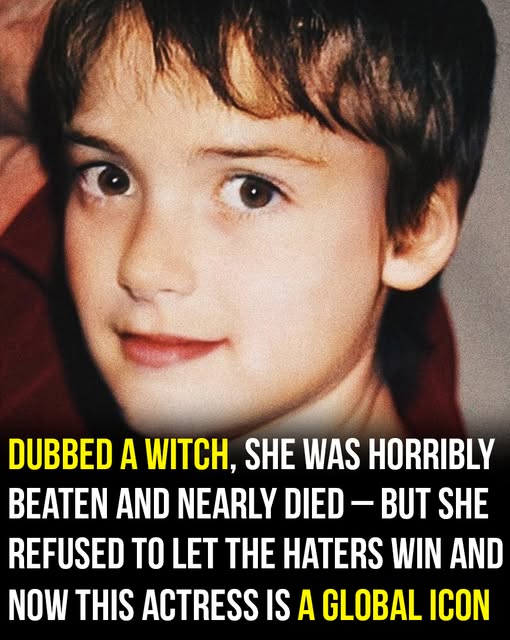
Winona Ryder is a name that has become synonymous with Hollywood success, ’90s film iconography, and resilience. Yet few fans may realize that her journey to stardom almost never happened.
Beneath the glitz and glamour of the red carpet lies a story of near-tragedy, enduring trauma, and extraordinary strength — one that began long before she ever stepped onto a movie set.
Born Winona Laura Horowitz on October 29, 1971, in Winona County, Minnesota, Ryder entered a world far removed from the Hollywood spotlight she would eventually command.
She is the daughter of Cynthia Palmer (née Istas), a video producer, editor, and author, and Michael D. Horowitz, an author, publisher, editor, and rare books dealer.
Growing up in a family of literary and artistic influence, Ryder was surrounded by books, creativity, and a profound appreciation for storytelling.
Her childhood was complicated by the lingering shadows of the Holocaust. Both sides of her family had endured unimaginable suffering: her maternal grandfather died fighting Nazis in the Pacific, while paternal relatives perished in concentration camps.
As a young girl, Ryder absorbed these stories with a mix of fear and fascination. In a 2020 interview with the Mirror, she reflected: “I think it came from overhearing stories of what happened in the camps.
I was terrified of being separated from my parents. … I am grateful my parents told me the truth, though they had to pick the right age to tell me because it is so horrific.”
These early experiences instilled in Ryder a deep sense of empathy, awareness, and, perhaps unknowingly at the time, a resilience that would shape her future career. She spent hours in libraries studying history, particularly the Holocaust, trying to make sense of her family’s legacy.
The Near-Drowning That Changed Everything
In 1983, at the age of 12, Ryder enrolled at the American Conservatory Theater in San Francisco, beginning her formal acting education.
That same year, however, she experienced a near-death incident that would leave a lasting mark on her life: she nearly drowned in the ocean. “When they pulled me out of the water, I didn’t have a pulse,” Ryder told the Hartford Courant.
The trauma of this near-death experience created a lifelong aquaphobia, a fear of water that would later challenge her professionally. While many might assume that childhood trauma fades with time, for Ryder, it became a defining factor in both her personal and professional life.
This fear was particularly tested during the filming of 1997’s “Alien: Resurrection”, where she and her co-stars had to perform underwater scenes in a 30-foot tank without goggles or masks.
Ryder underwent months of training to safely film these sequences, confronting her fears in a remarkable demonstration of perseverance.
Bullying and Violence: A Childhood of Struggle
Ryder’s early years were also marked by relentless bullying. Her pixieish appearance and short hair made her a target for classmates who mistook her for a boy.
One incident on her third day at a new school escalated to a severe attack: she was slammed into a locker, kicked, and suffered a fractured rib along with six stitches in her head. “I insisted I was a girl. I had really short hair, and they beat me up,” she recalled in The Tennessean, 1996.
Tragically, the school punished Ryder instead of the bullies, highlighting the profound lack of support she faced as a child. Even after she achieved fame with Beetlejuice (1988), the bullying persisted. “I remember thinking, ‘Ooh, it’s like the number one movie. This is going to make things great at school.’ But it made things worse. They called me a witch,” she said.
Despite these challenges, Ryder developed remarkable resilience, using her early experiences of fear and pain to fuel her determination and emotional depth as an actress.
Early Career Breakthroughs
Ryder’s professional breakthrough came at age 15 with Tim Burton’s Beetlejuice (1988). Her unique combination of quirkiness and vulnerability made her stand out in a film that would become a cult classic.
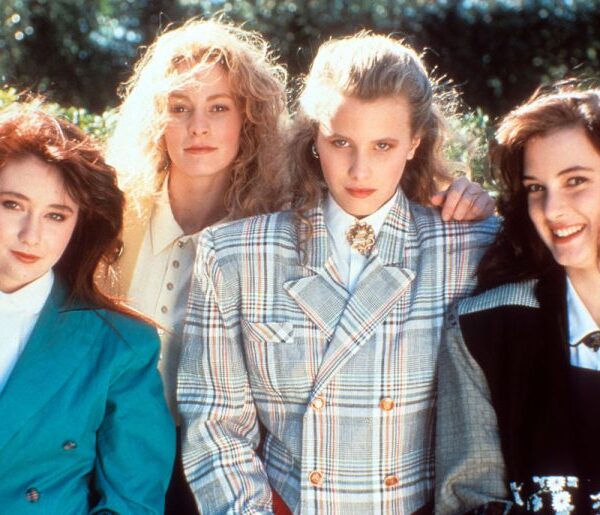
Following that, she starred in Heathers (1989), a dark teen comedy exploring high school cliques and social hierarchies. Although the film initially underperformed at the box office, it eventually became an iconic role that cemented Ryder’s status as a rising star.
Her career trajectory continued upward with Edward Scissorhands (1990), another collaboration with Burton, which became a box office success and showcased her ability to portray emotionally complex characters.
Ryder’s performances in The Age of Innocence (1993) and Little Women (1994) earned her back-to-back Academy Award nominations, affirming her status as a serious and versatile talent.
The Personal Struggles Behind the Fame
Despite her growing success, Ryder’s personal life was not without turmoil. She has been candid about her lifelong struggles with anxiety, depression, and mental health challenges. In 1990, she left The Godfather Part III to seek psychiatric treatment.
Years later, she openly discussed her anxiety and the challenges of playing roles that mirrored her personal fears, including her 1999 role in Girl, Interrupted. “I was terrified to play a character who was full of fear and anxiety knowing that I have been full of fear and anxiety … It’s something you battle with your whole life,” she told Entertainment Weekly.
Her experiences highlight the psychological toll that early trauma, fame, and bullying can have on young actors.
High-Profile Relationships and Media Scrutiny
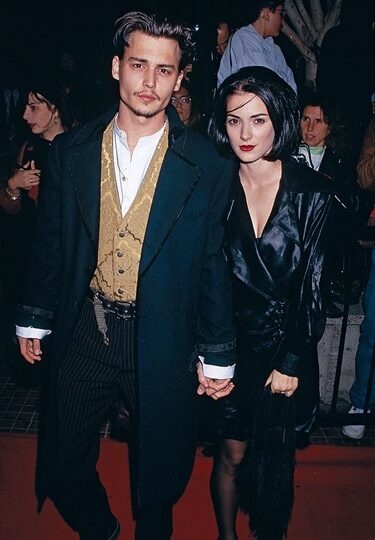
Ryder’s romantic life also attracted considerable media attention. Her high-profile relationship with Johnny Depp began in 1989 and quickly became tabloid fodder.
The couple got engaged when Ryder was 18 and Depp was 27, and their relationship included collaborations on films like Edward Scissorhands. Depp famously tattooed “Winona Forever” on his arm, later altering it to “Wino Forever” following their breakup in 1993.
In a 2022 interview with Harper’s Bazaar, Ryder reflected on the emotional difficulty of the breakup, explaining how the intense media scrutiny affected her self-perception: “I remember looking at myself and saying, ‘This is what I’m doing to myself inside.’ Because I just wasn’t taking care of myself.”
Challenges on Set and Professional Setbacks
Ryder has been transparent about the challenges she faced on film sets. During Bram Stoker’s Dracula (1992), director Francis Ford Coppola reportedly yelled at her to elicit a strong emotional performance.
While these tactics are considered unacceptable today, Ryder has expressed understanding in hindsight and maintains that she and Coppola reconciled.
Support from colleagues like Keanu Reeves helped her navigate these experiences. She has often spoken about the importance of allies in the film industry and how crucial it is for young actors to have supportive mentors.
Dealing with Fame and Stalking
Ryder’s fame brought not only opportunity but also unwanted attention. She has spoken candidly about multiple stalking incidents, some of which involved obsessive individuals attending film sets or sending letters.
While she has sometimes been able to handle these situations with humor, the experiences were serious reminders of the darker side of celebrity life.
Hiatus and Career Revival
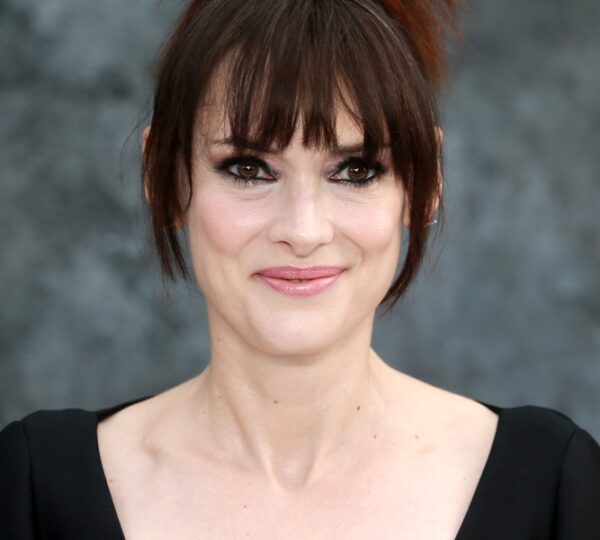
After a series of public setbacks and personal challenges, Ryder stepped away from the spotlight in 2001, taking a four-year hiatus from acting. However, she eventually made a comeback, slowly rebuilding her career with smaller projects before achieving renewed acclaim with her role as Joyce Byers in Netflix’s Stranger Things.
Fans and critics alike have praised Ryder’s performance, calling her casting “one of the greatest decisions of all time.” The role has reintroduced her to a new generation while highlighting her enduring talent, emotional depth, and relatability.
Mental Health Advocacy
Throughout her career, Ryder has been open about her mental health, advocating for greater understanding and awareness. She has discussed her experiences with anxiety, depression, and fear, demonstrating that even successful individuals face ongoing challenges.
Her honesty has inspired many fans to confront their own struggles, making her not only a cultural icon but also a symbol of resilience and empathy.
Legacy and Cultural Impact
Winona Ryder’s journey from a bullied, traumatized child in Minnesota to an internationally recognized actress is a testament to perseverance and talent.
She has become a role model for young performers, demonstrating that early adversity does not have to define one’s future.
Her influence extends beyond her performances. Ryder has inspired countless fans through her honesty about personal challenges, her commitment to meaningful roles, and her ability to reinvent herself in a rapidly changing industry.
In a 2024 interview with Harper’s Bazaar, Ryder reflected on her gratitude: “I feel incredibly lucky to have been able to live this life — however intense and overwhelming it got, it’s NOTHING compared to what it is now with the internet and social media. I just find myself feeling tremendous empathy toward people who have sacrificed so much.”
Today, Ryder’s career continues to thrive, and her story serves as a reminder that resilience, courage, and authenticity can overcome even the darkest early experiences.
Conclusion: From Pain to Inspiration
Winona Ryder’s life is a remarkable narrative of survival, talent, and evolution. Her early near-death experience, the trauma of bullying, and her personal struggles with mental health could have derailed her life entirely.
Yet, through determination and talent, she became one of the most iconic actresses of the ’90s, achieving critical and commercial success, and eventually reclaiming her place in contemporary culture through roles like Stranger Things.
Her story is not just one of Hollywood glamour but also of human resilience. Ryder’s willingness to confront fear, embrace vulnerability, and share her journey openly makes her a beacon of inspiration for actors, fans, and anyone facing personal challenges.
From Beetlejuice to Stranger Things, from near-tragedy to triumph, Winona Ryder remains an enduring figure whose life reminds us that talent, courage, and perseverance can shine even through the darkest of circumstances.