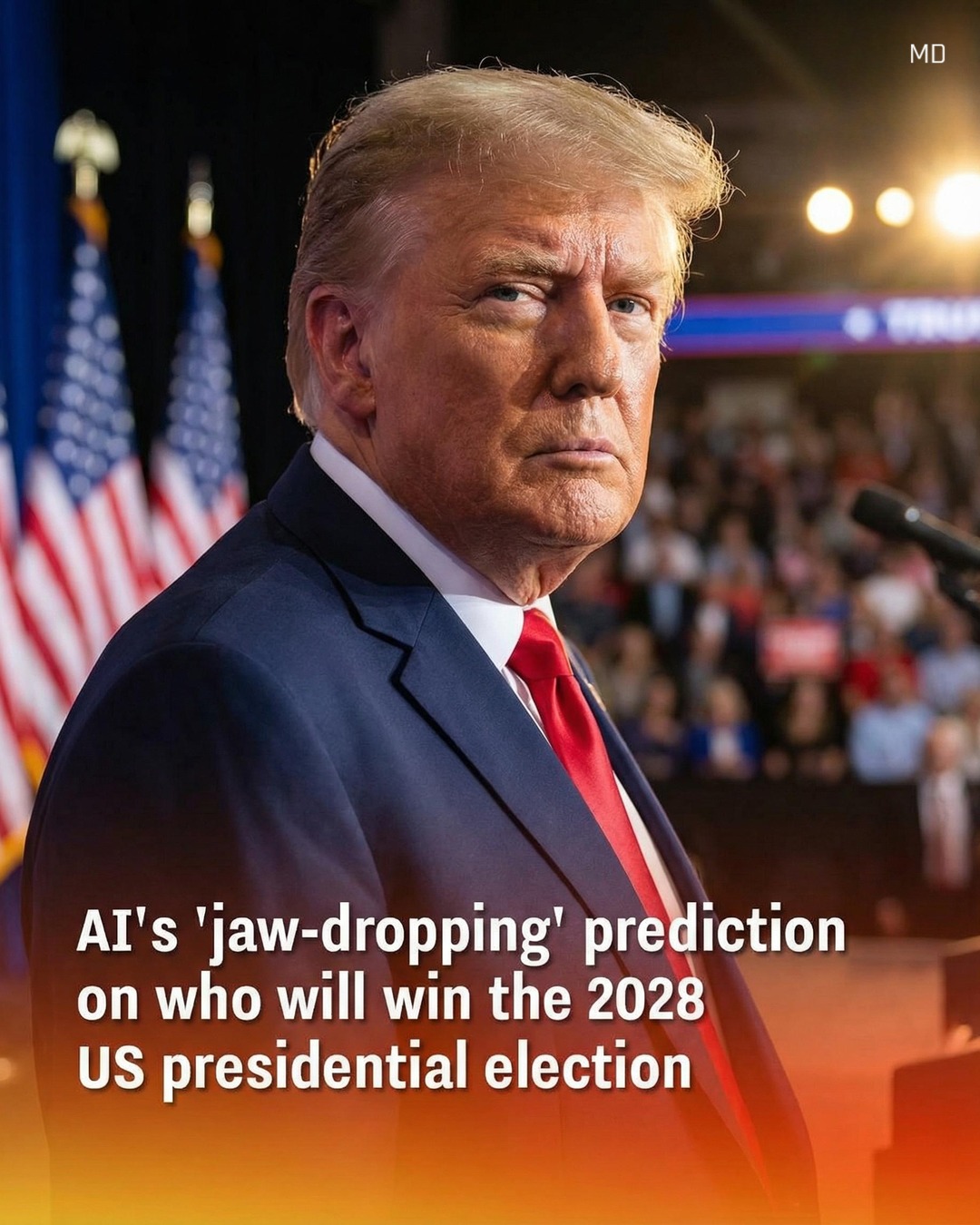
AI Simulation Offers Insights Into Possible Outcomes for the 2028 U.S. Presidential Electionon AI Simulation Offers Insights Into Possible Outcomes for the 2028 U.S. Presidential Election
A recent online video has sparked discussion after a content creator used Grok, an artificial intelligence tool developed by xAI, to simulate how the 2028 U.S. presidential election could unfold. The video presents a detailed scenario showing how early polling trends and historical voting patterns might shape a future contest. While the exercise is purely speculative, it has attracted attention because it offers a possible glimpse into how political dynamics could develop over the next election cycle.
Grok, which is integrated into the social media platform X, analyzed several potential candidates from both major political parties. The simulation assumed a scenario in which Vice President Kamala Harris might emerge as a leading Democratic contender, while Vice President JD Vance appears as a potential Republican frontrunner based on current polling discussions. The video also references other well-known political figures who could enter future primary races, noting that candidate fields often shift significantly as election cycles approach. Analysts caution that early polling numbers often change as campaigns develop and new issues shape voter priorities.
The simulation then categorized states by how strongly they have leaned toward one party in recent elections. States with consistent voting patterns were labeled as “solid,” while more competitive areas were categorized as likely or leaning toward one side. According to the AI-generated scenario, many traditionally Republican-leaning states were projected to remain stable, while Democratic strongholds were also expected to hold. Several battleground states in the Midwest and Sun Belt regions were highlighted as potential deciding factors, reflecting trends seen in previous elections where narrow margins determined the outcome.
In the end, the simulation projected a potential Electoral College outcome favoring the Republican candidate in this hypothetical scenario. However, experts emphasize that projections this far ahead should be viewed cautiously. Election results depend on numerous unpredictable factors, including economic conditions, candidate campaigns, public sentiment, and major national events. Political analysts widely agree that it is far too early to predict the 2028 election with certainty. Simulations like this are best understood as conversation starters rather than firm forecasts, as the political landscape could change considerably before voters ultimately head to the polls.