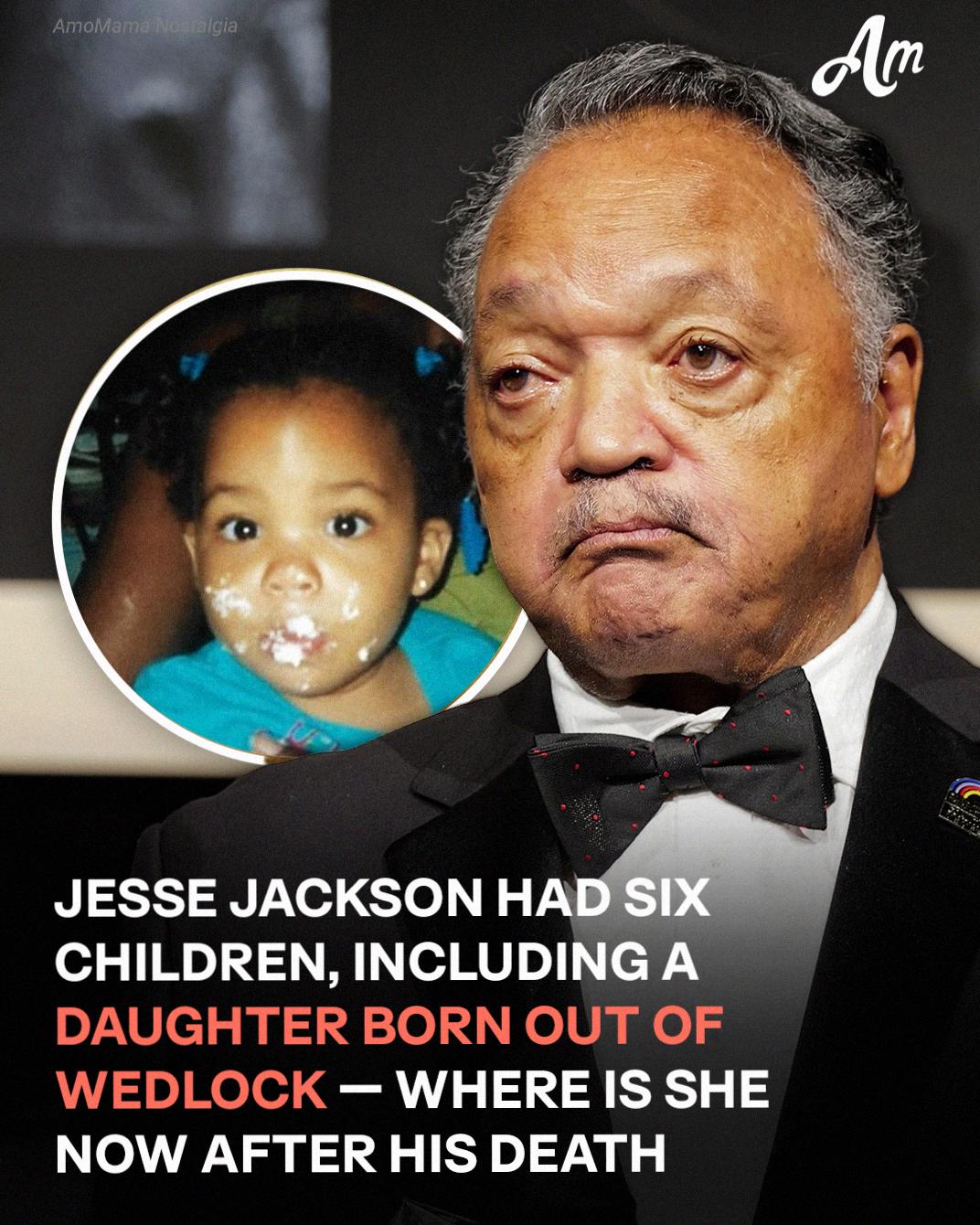
For more than five decades, Rev. Jesse Jackson stood at the center of America’s civil rights movement. On Tuesday, his family confirmed the news that closes a historic chapter.
The longtime activist, Baptist minister, and two-time presidential candidate died February 17, 2026, at 84, according to NBC News. A cause of death was not immediately given.
He is survived by six children.

Rev. Jesse Jackson at the National Bar Association’s annual convention on July 31, 2025, in Chicago, Illinois | Source: Getty Images
A Family’s Farewell
He died peacefully on Tuesday morning, surrounded by his family, the Jackson family said in an official statement.
“His unwavering commitment to justice, equality, and human rights helped shape a global movement for freedom and dignity,” the family said in a statement announcing his passing.
The family confirmed that he is survived by his wife, Jacqueline; their children — Santita, Jesse Jr., Jonathan, Yusef, and daughter Ashley Jackson; and grandchildren. He was preceded in death by his mother, Helen Burns Jackson; father, Noah Louis Robinson; and stepfather, Charles Henry Jackson.

Rev. Jesse Jackson pictured on July 31, 2025 | Source: Getty Images
“Our father was a servant leader — not only to our family, but to the oppressed, the voiceless, and the overlooked around the world,” the family added. “We shared him with the world, and in return, the world became part of our extended family. His unwavering belief in justice, equality, and love uplifted millions, and we ask you to honor his memory by continuing the fight for the values he lived by.”
Public observances will be held in Chicago. Final arrangements will be released by the Rainbow PUSH Coalition.
A Complicated Chapter
Tuesday’s statement also publicly acknowledged daughter Ashley — a reminder of a deeply personal chapter that became national news more than two decades ago.
In January 2001, Jackson admitted to an extramarital affair that resulted in the birth of a daughter. “This is no time for evasions, denials or alibis,” he said at the time, according to ABC News. “I fully accept responsibility, and I am truly sorry for my actions.”
He said he had been providing the child with “emotional and financial” support.
Ashley’s mother, Karin Stanford, later told CNN that she wanted Jackson “to be a father” to their daughter, according to a 2001 report from CNN. At the time, she said Jackson had been paying $4,000 a month in child support.
“This child deserves the monthly support she receives, a life insurance policy, provisions for a college education, and, most importantly, dignity and privacy,” Jackson said in response to questions from CNN in 2001.
Who Is Ashley Jackson?
Today, Ashley Laverne Jackson is a writer, producer, and social impact advocate.
According to her official biography, she earned a Master of Fine Arts in 2025 from USC’s Peter Stark Producing Program, becoming the first Spelman College graduate to complete the program. She previously graduated summa cum laude with an independent major focused on African American Narratives in Cinema and Television.
Ashley has worked in television development, including participating in the inaugural Disney Apprenticeship Program and supporting series such as “Grown-ish.” She also serves as a First Up Fellow under showrunner Prentice Penny.
Through her nonprofit and podcast, PUSH The Next Generation, she focuses on youth civic engagement and cross-generational dialogue. She has spoken for national organizations and was named one of the “100 Under 40” Most Influential People of African Descent in Media & Culture by MIPAD in partnership with the United Nations.
She has described her work as rooted in justice, identity, and civic engagement — values closely associated with her father’s public life.
Rev. Jackson Was a Witness to History
Long before his presidential campaigns, Jackson stood beside Rev. Martin Luther King Jr. He was present in Memphis on April 4, 1968, when King was assassinated.

Jesse Jackson holds a copy of the Daily Defender newspaper, which features the headline “King Murdered!,” on April 5, 1968 | Source: Getty Images
In a 2018 interview with The Guardian, Jackson recalled the moment, saying, “Every time I think about it, it’s like pulling a scab off a sore. It’s a hurtful, painful thought: that a man of love is killed by hate; that a man of peace should be killed by violence; a man who cared is killed by the careless.”
Jackson and Andrew Young were among the last surviving aides who witnessed the assassination.

Jesse Jackson carries the United Nations flag in the funeral procession of Rev. Martin Luther King, Jr. on April 9, 1968 | Source: Getty Images
From Pulpit to Presidential Politics
Jackson first made national headlines in 1984 when he entered the race for the Democratic presidential nomination. At the time, he was 42 years old and running with limited funds, a small staff, and no early consensus support from Black voters.

Jesse Jackson poses for a portrait in 1984 in Tallahassee, Florida | Source: Getty Images
As The New York Times reported in 1984, he was not simply a Black candidate — he was widely viewed as a “serious” Black presidential candidate. That shift carried long-term political consequences, energizing voters and reshaping how many Americans viewed Black leadership in national office.
He ran again in 1988, further cementing his place in political history. His campaigns brought issues of racial justice, voting access, and economic inequality into the national spotlight.

Reverend Jesse Jackson speaks to a Democratic gathering at the Cheyenne Civic Center on April 20, 1989 | Source: Getty Images
Health Battles in Recent Years
In November 2025, Jackson was hospitalized and placed under observation for a neurodegenerative condition, according to NBC News.
His organization, the Rainbow PUSH Coalition, said he had been managing progressive supranuclear palsy, or PSP, for more than a decade. He had originally been diagnosed with Parkinson’s disease, but in April 2025, doctors confirmed the condition was PSP.

Reverend Jesse Jackson attends an event at the Rainbow/PUSH Coalition headquarters on March 17, 2023 | Source: Getty Images
At the time, the organization said, “He was originally diagnosed with Parkinson’s disease; however, last April, his PSP condition was confirmed. The family appreciates all prayers at this time.”

Jesse Jackson is greeted as he leaves a rally for Sonya Massey at New Mount Pilgrim Church on July 30, 2024 | Source: Getty Images
Tributes From Civil Rights Leaders
Civil rights leader Rev. Al Sharpton responded quickly to the news.
In a statement, Sharpton said, “our nation lost one of its greatest moral voices,” and described Jackson as a man who “carried history in his footsteps and hope in his voice.”

Jesse Jackson attends a Sunday church service at Tabernacle Baptist Church on March 9, 2025 | Source: Getty Images
He added, “Reverend Jackson stood wherever dignity was under attack, from apartheid abroad to injustice at home. His voice echoed in boardrooms and in jail cells. His presence shifted rooms. His faith never wavered.”

Jesse Jackson attends the Cannes Lions Festival 2017 on June 20, 2017 in France | Source: Getty Images
A Lasting Legacy
Over decades, Jackson built a reputation as a figure who moved between protest lines and political offices. Through the Rainbow PUSH Coalition, he advocated for civil rights, economic fairness, and expanded political participation.
His 1984 and 1988 campaigns remain milestones in American political history. They helped expand voter engagement and changed expectations about who could compete on the national stage.

Jesse Jackson speaks from a lectern at the headquarters of Operation PUSH on July 17, 1981 | Source: Getty Images
Now, the focus turns to the legacy he leaves behind, not only in policy debates and campaign history, but within the family who surrounded him in his final hours.