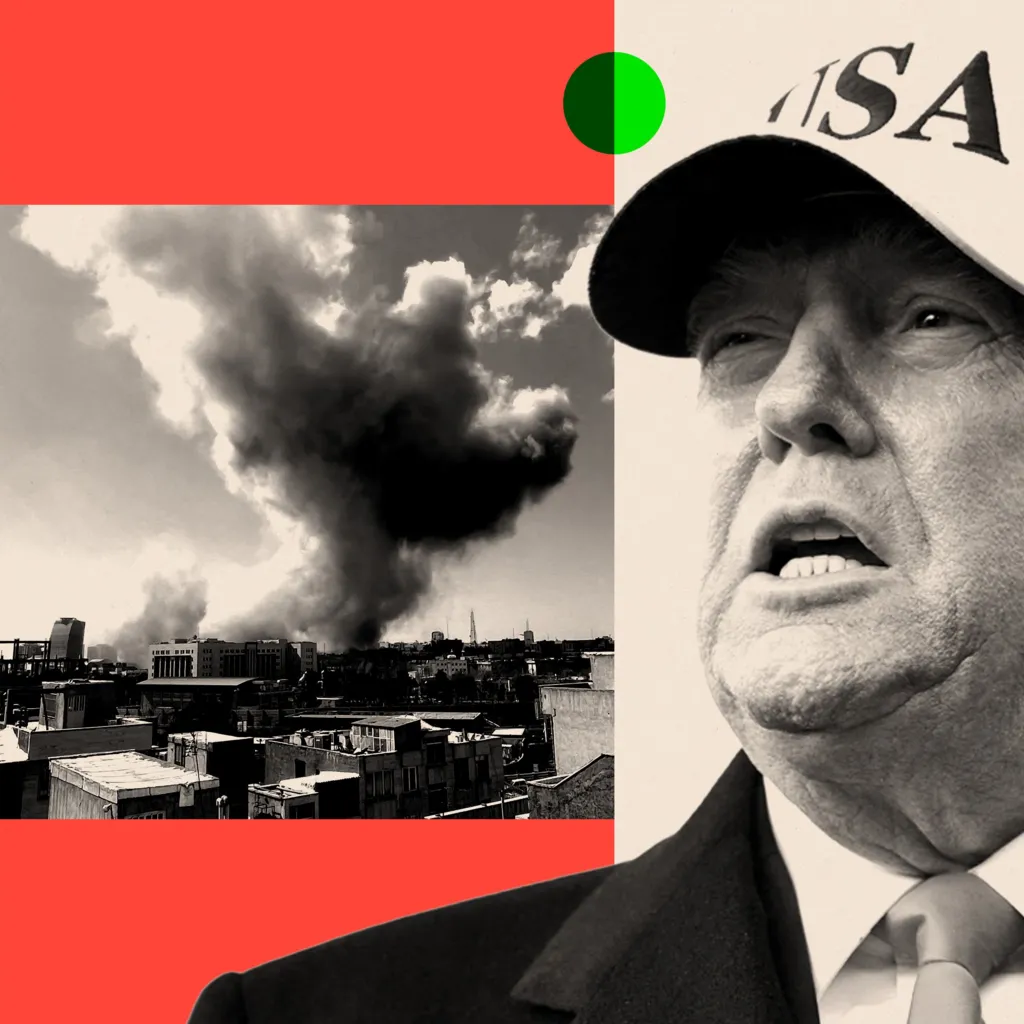
It is only day three of the new war between the United States, Israel and Iran.
It is already a regional war, after Iran’s decision to attack Arab states who are US allies as well as Iran’s neighbours across the Gulf. The United Kingdom has dropped its refusal to allow the US to use its bases.
The war is still escalating, and news alerts are pouring in on my phone. I’ve just read a press release from US Central Command saying that three US F-15E Strike Eagles have been shot down by Kuwaiti air defences in “an apparent friendly fire incident”. By the time I finish writing this piece more missiles will have been fired and more than likely people who are alive now will have been killed.
It is way too soon to have any idea of when or how the war will finish. Once wars start, they are hard to control. But here are some of the ways that the belligerents would like it to end.
Trump’s definition of victory
President Trump, as ever, has radiated confidence in American power since he announced the war had started in a video message filmed at his Mar-a-Lago residence in Florida. Other presidents might have chosen a solemn address from behind the Resolute desk in the Oval Office.
Trump wore an open-neck shirt and a white baseball cap pulled low over his eyes. He ran through a long charge sheet, arguing that Iran had been an imminent threat to the US since the Islamic Revolution in 1979.
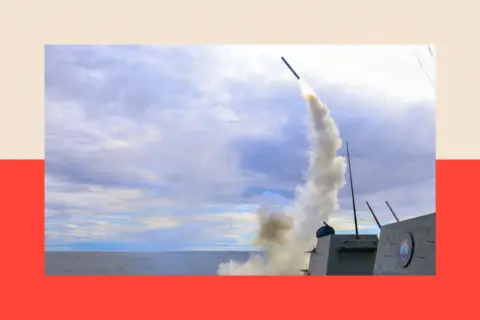
Trump can always change his mind, but in that speech, he provides a definition of his conception of victory. It amounts to a check list:
“We are going to destroy their missiles and raze their missile industry to the ground. It will be totally, again, obliterated. We’re going to annihilate their navy. We’re going to ensure that the region’s terrorist proxies can no longer destabilize the region or the world, and attack our forces, and no longer use their IEDs or roadside bombs, as they are sometimes called to, so gravely wound and kill thousands and thousands of people, including many Americans.”
Trump claimed Iran was developing missiles that could reach the US, a statement that is not backed up by US intelligence assessments. He also claimed it was close to developing a nuclear weapon, contradicting his own statement last summer that the US had “obliterated” Iran’s nuclear sites.
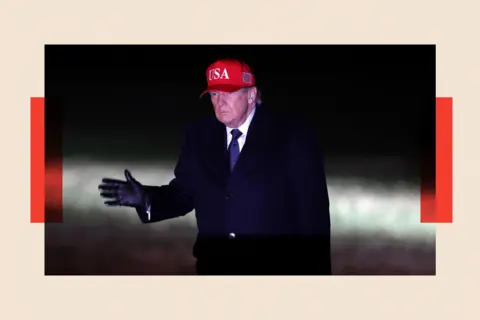
Trump believes that the US, with Israel, can cripple the regime in Tehran. If it does not capitulate, he sees it as being so smashed that the Iranian people will have their best chance in generations to take to the streets to seize power:
“When we are finished, take over your government. It will be yours to take. This will be probably your only chance for generations. For many years, you have asked for America’s help, but you never got it. No president was willing to do what I am willing to do tonight. Now you have a president who is giving you what you want. So let’s see how you respond.”
Transferring responsibility for regime change to the Iranian people, even when he is directly encouraging them to act, gives him a potential get out at a later date if the regime survives. But it can also be viewed as a moral responsibility for the US to see it through, though it’s an open question as to how much that would sway a president who believes there is always a deal to be done.
There is no precedent for changing a regime or winning a war against a well-armed adversary simply by using air power. In 2003 the US and its allies including the UK sent major ground forces into Iraq to remove Saddam Hussein. In 2011, Libya’s Col Muammar Gaddafi was removed by rebel forces armed by Nato and Gulf countries and protected by their air forces. Trump is hoping that the Iranian people can do the job themselves.
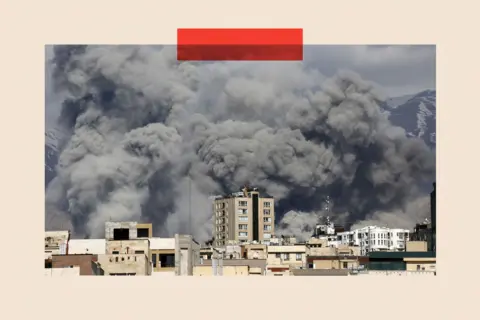 Anadolu via Getty Images
Trump’s plan is a huge gamble. The odds are stacked against bombing alone causing regime change.
Could there be an internal pro-western coup? Not impossible, but highly unlikely viewed from day three of the war.
It is more likely that the men now running the regime will hunker down, fire more missiles, fuelled by ideology and the conviction that they can take more pain than the US, Israel or the Arab Gulf states. Most of the pain will be felt by the long-suffering Iranian people. But they do not have a say in the matter.
Netanyahu’s calculation
Like Donald Trump, Benjamin Netanyahu has also made statements encouraging Iranians to take matters into their own hands. But if they cannot overcome the regime’s ruthless security forces, Netanyahu’s priority is smashing Iran’s military capacity and its ability to rebuild militias around the region that could threaten Israel.
For decades, Benjamin Netanyahu has seen Iran as Israel’s most dangerous enemy. He believes that the Islamic Republic’s rulers want to build a nuclear weapon to destroy the Jewish state.
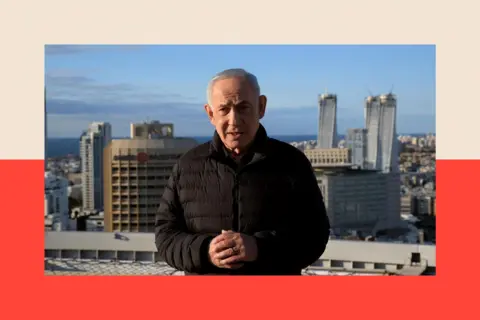 GPO HANDOUT/EPA/Shutterstock
On Sunday, day two of the war, he stood on a roof in Tel Aviv, perhaps the defence ministry building in the heart of the city, and stated how he saw the war ending.
He said that Israel and America together would be able “to do what I’ve hoped to achieve for 40 years – to crush the regime of terror completely”.
He said it was a promise that he would make sure became a reality.
Wars always have a domestic political dimension. Like Trump, Netanyahu faces elections later this year. Unlike Trump, his own job is on the line. Many Israelis blame Netanyahu for the security blunders that gave Hamas an opportunity to attack on 7 October 2023. He will take a giant step towards electoral forgiveness if he can sa