After fifty-three years of marriage, I believed there were no secrets left between Arthur and me. But a note hidden in his jacket led me to a truth I never could have imagined — one that changed everything I thought I knew about love, loss, and the meaning of forgiveness.
I never imagined the last act of love would feel so much like betrayal.
Three days ago, I buried the only man I ever loved.
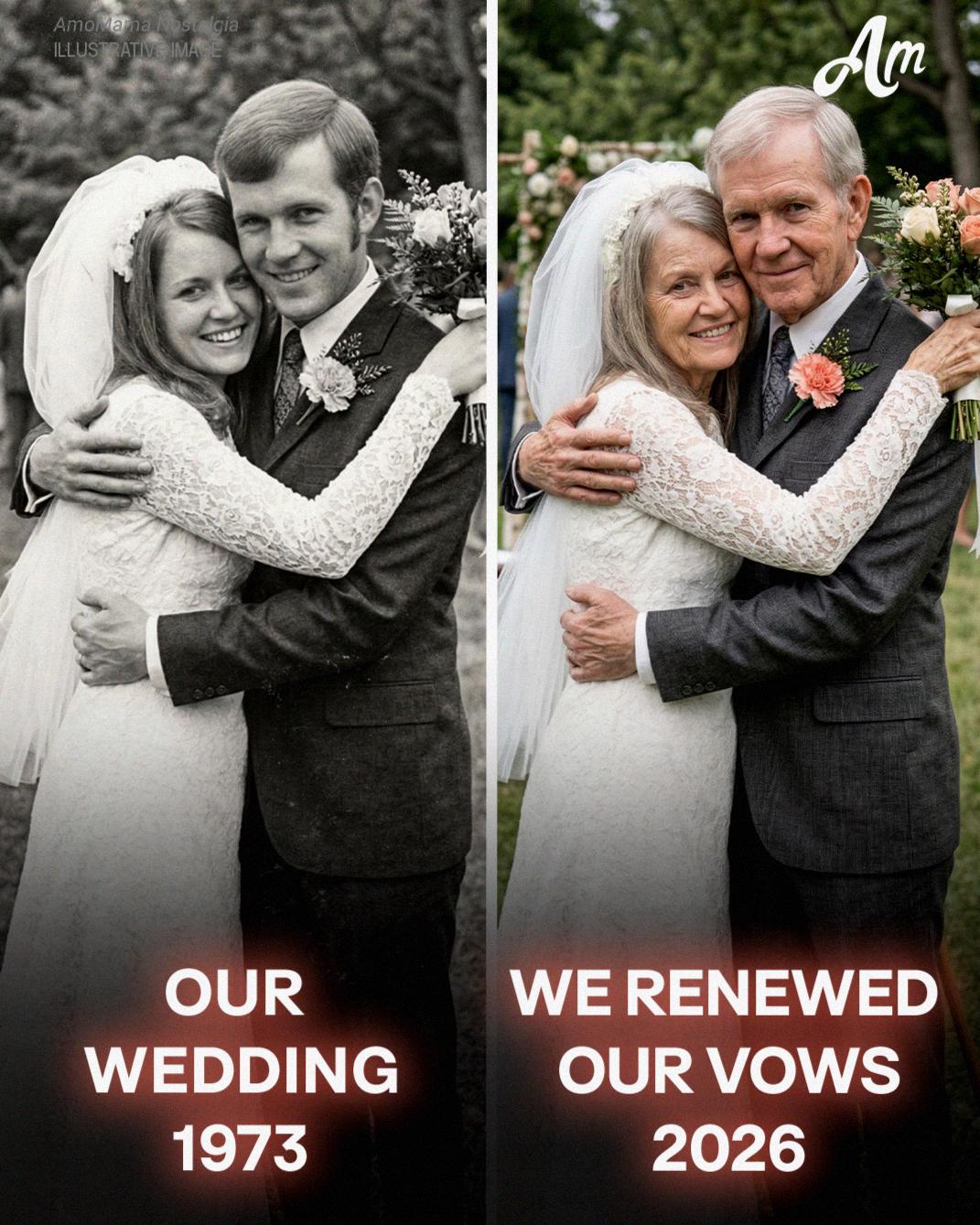
Arthur and I had been married for 53 years. That man was my best friend, my partner in all things, and the only person who knew every story I’d ever told.
People envied our marriage — how he’d warm my side of the bed, fill my gas tank, and hold my hand in church even when we didn’t need to say a word.
I thought I knew him.
I was wrong… so, so wrong.
Three days ago, I buried the only man I ever loved.
I insisted on dressing him for burial myself, the way I always pressed his jackets on Sunday mornings, fussing about lint and loose threads. Arthur was proud.
He liked to look “put together,” even if it was just for the grocery store. The funeral director watched as I smoothed his lapel and adjusted his favorite tie, navy blue with little silver stripes.
As I slid my hand into his inside pocket to straighten the lining, my fingers caught on something slick.
It was wax paper, folded and creased. Arthur always kept little things in his pockets: receipts, breath mints, and sometimes even the church bulletin I forgot in the pew.
I insisted on dressing him for burial myself.
I tugged it free, heart skipping.
On the outside: an address.
Inside, in my husband’s steady script, just two words: “I’m sorry.”
My hands trembled uncontrollably.
Fifty-three years, and this was what he left me?
I tucked the note into my purse and stepped into the pale morning. The funeral director asked if I needed help. I told him I just needed air.
I lied.
Fifty-three years, and this was what he left me?
***
The address was across town. As I drove, my mind spun wild.
What had Arthur been hiding? Another family? Gambling? A woman? Was there a secret Arthur had hidden all these years?
I caught myself gripping the wheel, knuckles white.
“Arthur, what did you do?” I muttered.
The city slipped past in a blur, fifty years of memories flickering through my head. Arthur’s laughter echoing from the kitchen, the way he’d sing along to the radio off-key, and our granddaughter’s tiny hand in his.
I missed him so much it physically hurt.
“Arthur, what did you do?”
I parked in front of the bakery, heart thumping. The sign in the window glowed gold against old brick.
“Grace’s Place.”
It was tidy and cheerful, and I almost turned around, but the note burned in my purse, daring me to walk in.
***
Inside, the air was thick with cinnamon, butter, and a kind warmth that felt almost like a hug. I paused in the doorway, staring at rows of glass cases gleaming with pastries.
A woman behind the counter dusted flour from her hands, dark eyes sparkling beneath loose brown hair.
She looked up. For a moment, she just stared, like she’d been waiting for me.
I parked in front of the bakery, heart thumping.
Then she smiled, not the way you smile at a stranger, but the way you do when you’re trying not to cry.
“Evelyn?” she said softly.
I nodded. “I found this address. My husband, Arthur… he passed away. He left me this note.”
Her eyes dropped to my purse, then back to my face. “Then he finally did it.”
A chill ran through me. “Did what?”
She came around the counter slowly, like she didn’t want to scare me. Up close, something in her face tugged at me, the shape of her smile maybe, or the way her hands trembled like mine did when I was upset.
“My husband, Arthur… he passed away. He left me this note.”
“Please,” she said gently. “Sit down before I tell you.”
I didn’t want to sit. I wanted to run. But I sat.
She took the note from my hand and smoothed the creases with careful fingers. “Arthur told me if you ever came here alone, it meant he’d run out of time.”
“Who are you?”
Her eyes filled. “Not really,” she said. “But I’ve known your name my entire life.”
“Sit down before I tell you.”
My throat tightened.
She swallowed hard. “Your parents lied to you, Evelyn.”
I stopped breathing.
“The day after I was born, they gave me away.” She pressed a hand to her chest. “I’m Grace.”
The world swayed beneath me. That name — Grace — hit like a stone dropped in water. I backed up.
“No. That can’t be.” My voice cracked. “My parents… Grace… No, this can’t be happening.”
Her eyes filled.
“Your parents lied to you, Evelyn.”
“Your parents lied to you, Evelyn. I was born healthy. But your parents — my grandparents — gave me away the day after I was born. You were so young… I know that now. Arthur tracked me down after reading your old letters.”
I shook, shoulders hunched. “I wrote to you for years, my dear. There must be about a hundred letters that I never sent. I was just writing to my angel baby… hoping that I’d see her when my time was up on earth.”
She knelt beside me, her voice barely more than breath. “He found them. He brought me one, once, after I opened this place. He told me you never stopped loving me — not for a single day.”
“Your parents lied to you, Evelyn.”
That was true.
I’d spent endless hours telling Arthur about my pregnancy, and how I was young and thought I could handle it, and how Grace’s father had left the moment the second line on the pregnancy test appeared.
My hand covered my mouth. “Why didn’t he tell me?” My whole life was suddenly, achingly, new.
Grace’s voice shook. “He found me over thirty years ago.”
I stared at her. “Thirty…”
She nodded. “He read the letters you wrote and started searching. When he found me, he didn’t tell me right away who I was to you. He just kept showing up.”
My whole life was suddenly, achingly, new.
My mouth went dry.
“He came to my high school graduation. He sat in the back at my wedding. And when my son was born, he held him before you ever got the chance. He knew exactly who I was. And he knew exactly who you were.”
The room tilted.
“Later,” she whispered, “he told me the truth. He told me you were my mother. He said you loved me, that losing me had broken something in you that never healed. But he begged me not to come to you. He kept saying the time had to be right.”
My mouth went dry.
My hands balled into fists. “He let me mourn my living child.”
“Yes.”
We sat together, two women with fifty years of longing between us, holding hands across a table covered in crumbs and lost time.
I wiped my eyes. “My parents… they told me you were gone. That I should move on. I never could. I don’t even remember your birth, Grace. I’ve locked that memory away.”
She squeezed my hand.
“He let me mourn my living child.”
I bit my lip. “Did you ever feel angry? At me, I mean?”
She nodded, honest. “When I was younger, yes. I thought maybe you’d given me away on purpose. Arthur told me, much later, that you hadn’t. He told me you loved me. He said he’d never seen someone grieve so quietly.”
A bell rang in the back. Grace stood. “Tea? Cinnamon rolls are my specialty.”
I managed a broken smile. “Arthur always said I could live off cinnamon rolls.”
She brought me both and sat across from me.
“Did you ever feel angry? At me, I mean?”
“Every Sunday,” she said softly, “I used to wonder if my mother liked cinnamon.”
I took a bite and closed my eyes. “She does.”
***
I sipped my tea, studying her face. “So Arthur helped you open this place?”
She nodded. “He helped more than he should have. Advice, money, repairs. Quiet things. He never missed a milestone, Evelyn. He just never let himself be honest about why.”
I looked at the photos on the wall. “And the little boy?”
Her face brightened. “My son, Jamie.”
“He just never let himself be honest about why.”
I swallowed. “You’re telling me I have a grandson.”
“Yes,” she said. “And Arthur met him twice.”
That one nearly finished me. “He met my grandson before I did.”
Grace reached for my hand. “I’m sorry.”
I pulled in a shaky breath. “He said he loved me. But love without truth can still rob a woman blind.”
She didn’t say anything.
I wiped a tear, smiling. “I’d love to meet him, Grace. If it’s not too much. I can just be a random customer, not his grandmother.”
She squeezed my hand again. “It’s not too much. My husband, Mark, is picking him up from school. I’ll call them now.”
“He met my grandson before I did.”
***
By late afternoon, Grace’s husband, Mark, came in with Jamie.
The little boy stared at me. “Are you really my grandma?”
“I am, if you’ll let me.”
He threw his arms around my neck like he’d known me forever.
***
I left the bakery just as the sun dipped low, Grace’s number saved in my phone, and her hug still warm on my shoulders.
I promised I’d see her again, but the weight in my chest told me this reunion wasn’t finished; it was just the beginning.
“Are you really my grandma?”
***
The next morning, I returned to the funeral home with Grace beside me.
She wore a simple navy dress and held herself very still, like she wasn’t sure she had the right to take up space there.
“You do,” I told her before we went in. “You have every right.”
The chapel was already filling. My children turned when they saw us. So did my sister-in-law. A hush moved through the room.
I felt Grace hesitate beside me, but I took her hand.
“You have every right.”
We walked together to the casket. Arthur lay there in his blue tie, looking peaceful in a way I no longer trusted.
I stood straight and turned to my family.
“Before this service begins,” I said, my voice shaking only once, “there is something all of you need to know.”
Every eye in the room fixed on me.
My oldest daughter looked from me to Grace and went pale. My son frowned like he was trying to force sense into something that had none. Even Arthur’s sister pressed a hand to her chest.
Every eye in the room fixed on me.
No one spoke. The whole room seemed to hold its breath with me.
For one strange second, I felt ashamed — not because of Grace, but because I had spent a lifetime carrying other people’s shame as if it belonged to me.
I tightened my hold on Grace’s hand. “This is my daughter, Grace. She was taken from me at birth, and I only found her yesterday.”
Gasps rippled through the chapel. One of my sons whispered, “Mama…”
My daughter’s eyes filled so fast it took my breath away. Arthur’s sister sat down hard in the front pew like her knees had given out.
The whole room seemed to hold its breath with me.
Someone near the back murmured, “Lord, have mercy.”
And for the first time since I found that note, I didn’t feel small. I felt angry. Not wild angry. Clean angry.
It was the kind of anger that burns shame out of you, and I had spent fifty-three years being a good wife.
I was done being a quiet one.
I kept going. “Arthur knew. He knew for years. And whatever else is said about him today, that truth will not be buried with him.”
I had spent fifty-three years being a good wife.
Grace’s fingers trembled in mine.
I looked at Arthur one last time. “I loved you,” I said quietly. “But I won’t lose another day to your silence.”
Then I faced my family and lifted Grace’s hand a little higher.
“This is my daughter,” I said again. “And I won’t lose another day with her.”
Some stories don’t end at funerals. Some stories begin in bakeries, in broken silences, and in hands held higher than shame.
“I won’t lose another day to your silence.”