Five Italian divers who vanished during a deep-sea excursion in the Maldives were later found dead inside an underwater cave nearly 50 meters below the surface, raising growing questions about whether the group exceeded recreational diving limits and entered conditions far more dangerous than expected.
The case has since grown in scope: a Maldivian military diver also lost his life during the recovery mission, and an investigation is now underway into the depth of the dive, the equipment used, and whether the group’s plans were ever fully disclosed to authorities.

A group of divers | Source: Getty Images
Maldives government chief spokesperson Mohamed Hussain Shareef has described it as the worst single diving incident in the country’s history.
The group was traveling aboard the Duke of York, a 36-meter luxury liveaboard vessel that had set sail from the Maldivian capital, Malé, on May 10 for a week-long cruise. Twenty other passengers remained on board when the five entered the water that morning. None of them resurfaced.

Divers in the deep waters | Source: Getty Images
Here is what investigators, officials, and diving experts say may have happened.
Did the Group Dive Deeper Than the Law Allows?
The mouth of the cave the group entered sits roughly 47 to 50 meters below the ocean’s surface. The legal recreational diving limit in the Maldives is 30 meters, and anything beyond 40 meters requires specialized training and equipment.
Maldives government chief spokesperson Mohamed Hussain Shareef told CNN that the country’s laws prohibit both recreational and commercial divers from descending beyond that threshold. He added:
“Unfortunately, this appears to have happened a lot deeper because even the cave’s mouth is almost 50 meters under.”
Monica Montefalcone’s team held a scientific research permit, valid until the Sunday following the dive, which allowed descents to 50 meters across several atolls, including Vaavu, with the Duke of York named as the designated vessel.
A weather alert had also been in effect. The Maldives Meteorological Service had issued a yellow warning for rough seas and strong winds in the area on the day of the dive.
Orietta Stella, the lawyer representing Italian tour operator Albatros Top Boat, told Italy’s Corriere della Sera that the group appeared to be using standard recreational gear rather than technical deep-diving equipment.

Divers in the deep waters | Source: Getty Images
She also clarified that Albatros neither owned the Duke of York nor employed its crew, which had been hired locally.
Who Were the Five Experienced Divers Who Never Resurfaced?
The group was experienced, academically connected, and familiar with marine research diving, which has made what happened all the more difficult to explain.
Monica Montefalcone, an associate professor of ecology at the University of Genoa, was in the Maldives on a scientific mission to study the impact of climate change on marine biodiversity. She was accompanied by her 20-year-old daughter, Giorgia Sommacal, a biomedical engineering student.
Research fellow Muriel Oddenino, who specialized in marine conservation, was also part of the group.
Federico Gualtieri, 31, a recent marine ecology graduate, rounded out the research team. His master’s thesis had focused on the Maldivian atolls.
The fifth member, Gianluca Benedetti, served as the group’s diving instructor and boat operations manager. He had spent years in banking and finance before leaving that career to pursue diving full-time.
A sixth diver had planned to join but changed her mind as the others entered the water. The 20 passengers who remained aboard the Duke of York were later offered psychological support by the Italian Red Crescent.
Carlo Sommacal, Montefalcone’s husband and Giorgia’s father, described his wife as a diver who had completed roughly 5,000 dives and had survived the 2004 Indian Ocean tsunami while underwater off the coast of Kenya. He said:
“She would never have put our daughter’s or other children’s lives at risk.”
In a statement, Greenpeace Italia remembered Montefalcone for her expertise and guidance, as well as the passion and enthusiasm she brought whenever she spoke about the ocean and the need to protect it.
What Experts Say Could Have Gone Wrong Inside the Cave
No cause has been officially confirmed. But several diving specialists, speaking independently, have pointed to a consistent set of risks.
Claudio Micheletto, director of pulmonology at the University Hospital of Verona, suggested the group may have experienced a problem with their air tanks.
He explained that oxygen toxicity at extreme depths can trigger symptoms including dizziness, pain, confusion, and impaired consciousness, potentially leaving divers unable to return safely to the surface.
Alfonso Bolognini, president of the Italian Society of Underwater and Hyperbaric Medicine, raised the possibility that panic may have played a part. Inside a cave at that depth, he explained, even a single diver’s agitation can cause silt to cloud the water and reduce visibility to near zero.

A diver exploring the waters inside the Kandooma Caves, South Male Atoll, Maldives | Source: Getty Images
He stressed he had no direct knowledge of what had occurred, but warned that “the component of panic could lead to even fatal errors.”
British cave diving expert John Volanthen, who played a key role in the 2018 Thai cave rescue, pointed to nitrogen narcosis, a disorienting condition caused by breathing compressed air at depth.
He said that as divers descend further, narcosis can trigger panic while simultaneously making it harder to navigate a route back out. If the cave floor or walls were disturbed, he added, the resulting silt cloud would make locating the exit significantly harder.
Shaff Naeem, an advisor to the Maldives National Defence Force who has personally completed more than 50 technical dives in the same cave, also pointed to the possibility of inadequate gas supplies combined with the disorienting effects of strong underwater currents on visibility.
Why Did the Rescue Mission Become So Dangerous?
According to Divers Alert Network Europe, the cave system reaches roughly 70 meters at its deepest point and stretches about 200 meters in length, with narrow passages, strong currents, and total darkness creating highly dangerous diving conditions.
These were the conditions facing every diver who went in after them.
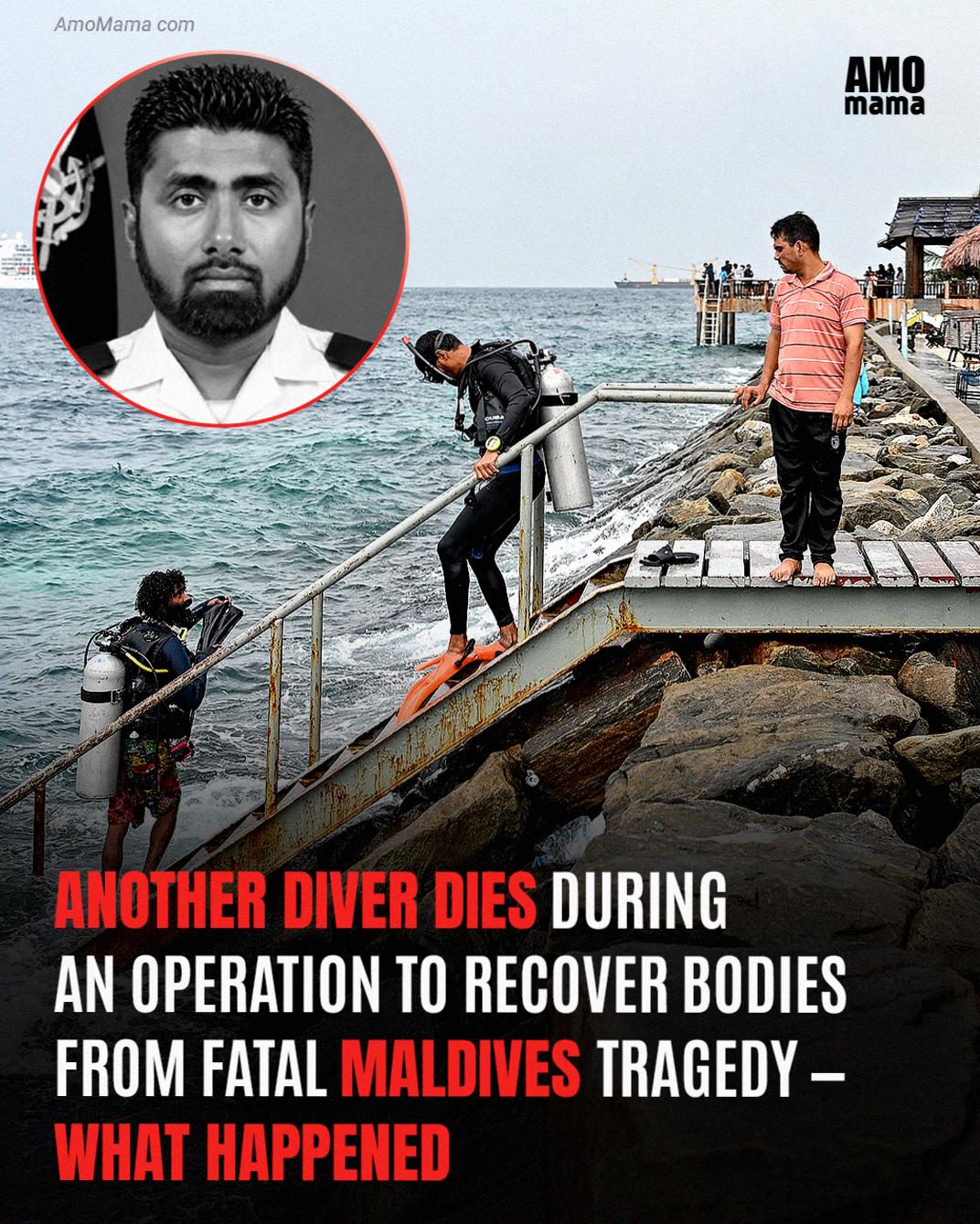
Staff Sergeant Mohamed Mahudhee, 43, one of the most senior divers in the Maldives National Defence Force, lost his life on May 16 after developing decompression sickness during a recovery attempt.
Shareef said Mahudhee had been diving in a pair, as per protocol, and was returning to the surface when his partner noticed something was wrong. The rest of the team entered the water immediately but found him unconscious.
He was laid to rest with full military honors in the capital, Malé, where hundreds gathered, including President Mohamed Muizzu. Shareef said:
“He was one of the most senior divers, which shows just how challenging this dive is.”
The four remaining Italian divers were located on May 18 by a team from Divers Alert Network Europe, using specialized rebreathers and underwater scooters.
They were found together in the deepest section of the cave. A diver surfaced carrying a logbook with four words written across the page:
“WE FOUND ALL FOUR.”
What Are Investigators Focused on Now?
The operating license for the Duke of York, the vessel used for the excursion, has been suspended as investigators examine whether safety protocols were followed.
Through its lawyer, Italian tour operator Albatros Top Boat said the company was unaware the group intended to dive beyond the Maldives’ 30-meter recreational limit and said it would not have approved the descent had it known.
Maldives government spokesperson Mohamed Hussain Shareef said authorities plan to fully investigate the circumstances surrounding the incident.
In later reports, the University of Genoa confirmed the cave dive was conducted privately, outside any university-authorized research.
Officials also revealed that two members of the group, Sommacal and Benedetti, were not listed on the scientific research permit, and that the cave itself was never referenced in the original research proposal submitted to Maldivian authorities.
Italy’s Foreign Minister Antonio Tajani confirmed that everything possible would be done to return the Italians home. The Maldivian and Italian governments have been in communication, with President Muizzu personally conveying his condolences to Italian President Sergio Mattarella.

Divers near the surface of the water | Source: Getty Images
Shareef said local people were devastated not only because of the scale of what had occurred, but because the victims were Italian, noting the long and close relationship between the two nations. “Everything will be looked into,” he added.
Still, many questions remain unanswered.