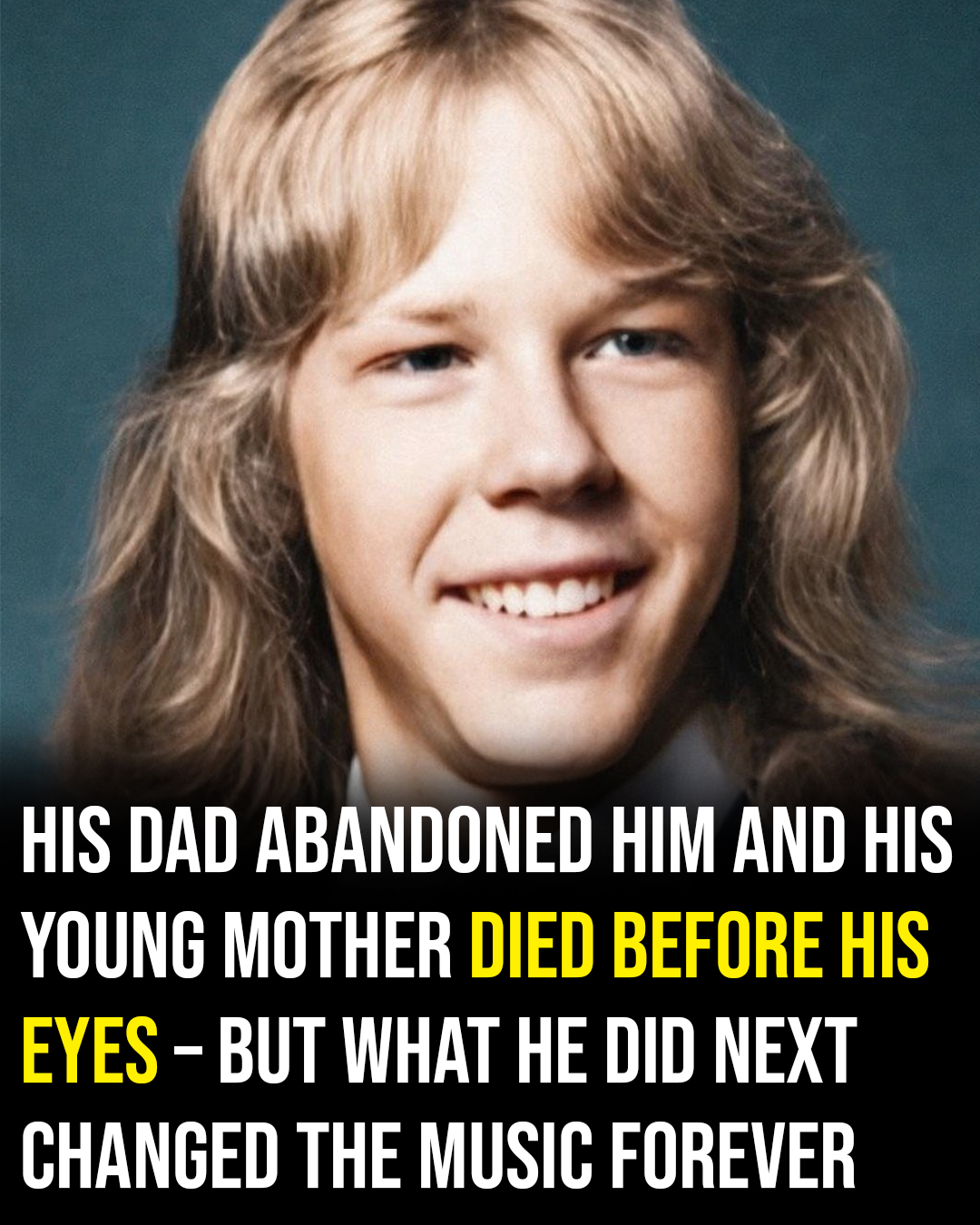
Some lives feel larger than life — shaped by both triumph and hardship in ways that seem almost cinematic. For James Alan Hetfield, pain didn’t just influence his story — it ultimately shaped his sound.
Born on August 3, 1963, in Downey, California, Hetfield grew up far from the rock‑and‑roll spotlight he would one day command. He was the son of Cynthia Bassett, a light opera singer, and Virgil Lee Hetfield, a truck driver, born into a family rooted in music and strict religious belief.
His early childhood was marked by a deep immersion in Christian Science, a faith emphasizing spiritual healing through prayer and rejecting traditional medicine. This belief would later fuel some of his most personal writing.
James had two older half‑brothers from his mother’s first marriage and one younger sister, Deanna. Though surrounded by family, the young Hetfield often felt isolated amid the strict doctrines that governed his home life and schooling.
He later spoke about how his religion affected him in school: instead of attending health classes, he was made to wait outside or in administrative offices, a situation that fueled feelings of alienation.
As a child, Hetfield began piano lessons at age nine. Soon after, he gravitated toward drums using his older half‑brother’s kit, and then picked up guitar at age 14, teaching himself riffs and chords that would form the foundation of his musical voice.
He listened obsessively to records by bands like Aerosmith, Black Sabbath, Led Zeppelin, Thin Lizzy, and Queen, soaking up the heavy, melodic styles that would later echo in his own compositions.
Despite his musical inclinations, teenage life was not easy. His parents divorced in 1976, when he was thirteen, a rupture that left him feeling abandoned and confused at a formative age.
Not long after the separation, his mother Cynthia developed cancer — yet due to her Christian Science beliefs, she refused medical treatment and relied solely on prayer, even as her health deteriorated.
James watched his mother suffer and weaken over time, saying later that nothing about it made sense and that he felt powerless to help her.
When Cynthia died in February 1980, Hetfield was just sixteen years old. The loss was crushing — compounded by the belief that her faith, rather than modern medicine, might have saved her life.
After his mother’s death, James went to live with his older half‑brother David, who provided stability during a period of emotional upheaval and grief.
That grief would later surface in Metallica songs like “The God That Failed” and “Until It Sleeps,” where themes of faith, loss, anger, and betrayal are woven into powerful musical narratives.
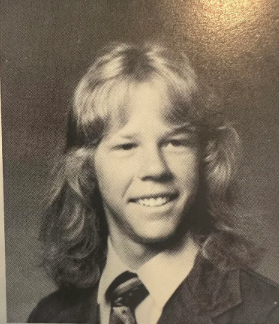
Hetfield attended Downey High School for his freshman and sophomore years before graduating from Brea Olinda High School in 1981, all while devoting countless hours to mastering his instrument.
In high school he formed or joined local bands such as Obsession and Leather Charm, testing his developing songwriting and performing skills with fellow young musicians in Southern California’s vibrant underground scene.
Although still shy and reserved, music offered him a voice that words alone could not, providing a channel for intense emotion, frustration, and creative exploration.
After graduating, Hetfield briefly worked odd jobs while focusing obsessively on music, perfecting his rhythm guitar playing and songwriting with an intensity that hinted at something much bigger on the horizon.
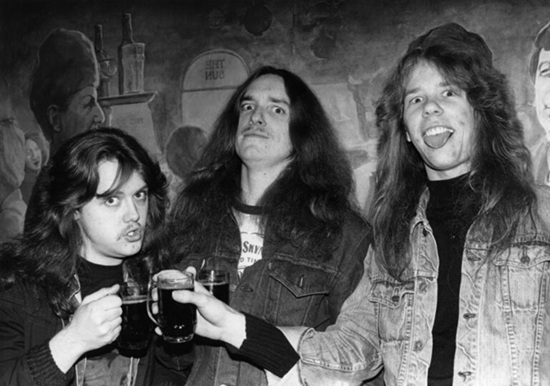
In October 1981, everything changed. Hetfield answered a classified ad placed by drummer Lars Ulrich in The Recycler newspaper seeking musicians to form a band. Their meeting sparked an immediate creative connection that would redefine heavy music.
Together with Ulrich, they set out to build something distinct — heavier, faster, and more raw than anything else at the time. Their early collaboration became the foundation of Metallica.
Over the next decade, Metallica honed its sound, blending intricate riffs with fierce energy and emotionally charged lyrics. Albums like Kill ’Em All and Ride the Lightning pushed the boundaries of what metal could be.
With Master of Puppets and …And Justice for All, Metallica’s reputation as brilliant composers and performers grew rapidly, winning acclaim from fans and critics alike for their precision and intensity.
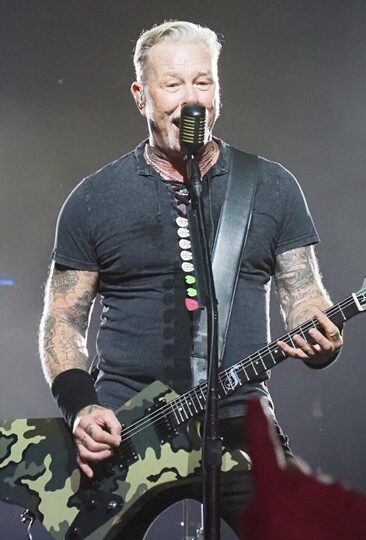
In 1991, the release of Metallica — known universally as The Black Album — catapulted the band into global superstardom, spawning massive hits like “Enter Sandman,” “Nothing Else Matters,” and “The Unforgiven.”
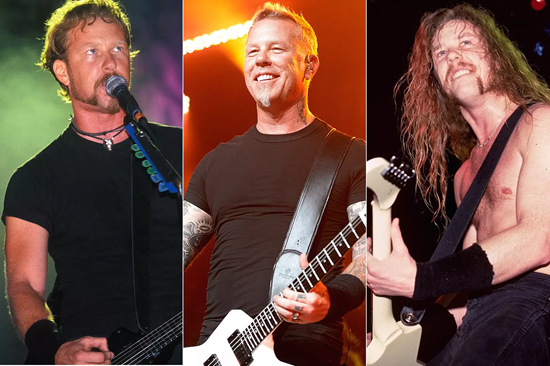
James Hetfield’s songwriting became a defining voice of a generation. His raspy vocals, rhythmic guitar, and personal lyricism resonated with millions of fans worldwide, many of whom connected deeply with themes of struggle and defiance.
But even as Metallica conquered arenas, there was a price to pay. Nearly constant touring, intense pressure, unresolved grief, and a restless internal drive took a toll on Hetfield’s emotional and physical wellbeing.
Through much of the 1990s, his battles with alcohol and anger simmered beneath the surface, creating personal challenges that affected both his life and his role in the band.
In 2001, Hetfield reached a turning point. He voluntarily entered a rehabilitation program to address his addiction and anger issues — a decision that was both difficult and transformative.
His journey through recovery was documented in Metallica: Some Kind of Monster, an unflinchingly honest film that revealed the band’s internal struggles and Hetfield’s personal confrontation with his demons.
Rather than hiding his challenges, Hetfield faced them head‑on, earning respect not just as a musician but as someone willing to grow beyond his past.
In interviews, he has described music and recovery as twin lifelines — tools not merely for artistic expression, but for survival and self‑understanding.
He also became a devoted family man. James married Francesca Tomasi on August 17, 1997, and the couple had three children together, further grounding him and giving new purpose to his life.
Family life, along with sobriety, reshaped his worldview, allowing him to channel his energies into love, faith, and renewal rather than self‑destruction.
Through the 2000s and 2010s, Metallica continued to evolve, releasing acclaimed albums like Death Magnetic, Hardwired… to Self‑Destruct, and remaining one of the most influential rock bands in history.
Hetfield’s voice remained instantly recognizable — a blend of grit, melody, and heartfelt intensity that defined countless songs and shaped the heavy metal genre itself.
Beyond Metallica, his personal transformation became an inspiration to fans around the world who saw in his journey a testament to resilience, honesty, and the power of art to heal.
James also underwent further introspection about spirituality, incorporating personal beliefs into his life while distancing himself from the strict doctrines of his youth — a shift reflected in the depth and nuance of later lyrics.
More than 40 years after co‑founding Metallica, Hetfield remains an active performer, recording artist, and creative force, continuing to connect with audiences across generations.
His legacy is not defined solely by success, but by resilience — a journey from pain to purpose, confronting loss, rejection, addiction, and triumph on his own terms.
James Hetfield’s story is undeniably powerful — a testament to how suffering can fuel creativity, and how art can transform personal anguish into collective strength.
Because the man behind the music didn’t just help define a genre — he showed millions that even the darkest chapters of life can lead to something extraordinary.