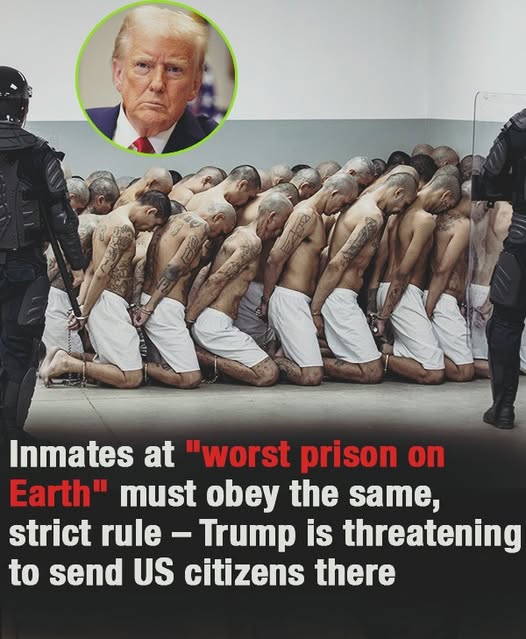
El Salvador’s Centre for the Confinement of Terrorism, widely known as CECOT, has become one of the most closely watched prison facilities in the world. Located approximately 70 kilometers east of San Salvador, the complex covers a large secured area and was constructed as part of President Nayib Bukele’s national security strategy. Since its opening in February 2023, it has been presented by the Salvadoran government as a central tool in combating gang-related violence and organized crime.
The prison is designed to hold up to 40,000 inmates, making it one of the largest correctional facilities in the Americas. Authorities in El Salvador have described it as part of a broader effort to restore public safety in a country that has historically faced high levels of violent crime. However, its scale, structure, and operating policies have also raised significant international debate regarding human rights, due process, and long-term incarceration conditions.
Political Context and Security Policy
CECOT was developed under President Nayib Bukele’s security initiative, which includes large-scale anti-gang operations and emergency legal measures. Supporters of the policy point to a noticeable decline in homicide rates across El Salvador since its implementation. Government officials argue that strict enforcement and mass detentions have contributed to improved safety in communities that were previously affected by gang violence.
At the same time, critics have raised concerns about the legal framework used to detain individuals. Human rights organizations and legal experts have questioned whether due process protections are consistently applied in all cases. Reports have suggested that large numbers of arrests have occurred under emergency conditions, leading to concerns about the possibility of wrongful detention or insufficient evidence in some cases.

Structure and Design of the Prison
CECOT has been described by analysts as a highly controlled and secure facility focused primarily on containment rather than rehabilitation. According to reporting and expert analysis, the prison’s infrastructure emphasizes isolation, surveillance, and strict control of movement. Cells are designed for high occupancy, with limited personal space and minimal furnishings.
International observers who have reviewed conditions through official visits and reports have noted the absence of traditional rehabilitation programs commonly seen in other correctional systems. Instead, the structure appears to prioritize long-term detention and maximum security management. These design choices have contributed to ongoing debate regarding the prison’s role in the broader justice system.
International Attention and U.S. Immigration Debate
CECOT gained additional international attention following discussions involving deportation policies and cross-border cooperation. Former U.S. President Donald Trump’s immigration stance has been linked in media reporting to renewed debate about how foreign nationals accused of crimes are handled under international agreements.
In 2025, reports indicated that discussions between the United States and El Salvador included arrangements related to the detention of deported individuals accused of violent offenses. According to reporting by Reuters and other outlets, financial arrangements were made to house certain detainees in Salvadoran facilities, including CECOT, for a limited period.
U.S. officials involved in immigration enforcement stated that such measures were part of broader efforts to address transnational crime and illegal migration. At the same time, legal challenges and judicial reviews have questioned the scope and timing of deportation actions under emergency legal interpretations.
Human Rights Concerns and International Criticism
Human rights organizations, including international monitoring bodies, have expressed concerns about detention conditions within CECOT. Some reports describe the facility as extremely restrictive, with limited access to personal space, reduced freedom of movement, and strict daily routines. Critics argue that such conditions may raise questions about compliance with international standards for humane treatment of prisoners.

Miguel Sarre, a former member of the United Nations Subcommittee for the Prevention of Torture, has publicly described the prison in strongly critical terms, emphasizing concerns about isolation and the long-term nature of confinement. Other analysts have similarly questioned whether the focus on security may outweigh considerations of rehabilitation and reintegration.
It is important to note that many of these concerns are based on observations, interviews, and limited access reporting, as full independent monitoring of the facility has been restricted.
Reported Conditions Inside the Facility
According to official tours and media reports, inmates at CECOT are housed in large, windowless cells equipped with metal bunks. Reports indicate that prisoners spend the majority of their time confined, with limited opportunities for outdoor activity or structured programs. Exercise periods, where permitted, are reportedly short and conducted in controlled environments.
Uniform policies are strictly enforced, with inmates required to wear standardized clothing and maintain uniform appearance, including regularly shaved heads. Authorities have stated that such measures are intended to maintain order and security within a high-risk environment.
Food provisions, surveillance systems, and daily routines are tightly regulated according to prison administration accounts. Officials have explained that strict controls are necessary due to security risks associated with the inmate population.
Conflicting Narratives and Public Perception
Public perception of CECOT varies significantly depending on perspective. Supporters of El Salvador’s policies view the prison as a necessary response to decades of gang violence and instability. They argue that strong enforcement measures have contributed to measurable improvements in public safety and reduced crime rates.
On the other hand, critics emphasize concerns about human rights, legal safeguards, and long-term detention without clear rehabilitation pathways. International media coverage has highlighted contrasting narratives, with some reports focusing on improved security outcomes and others focusing on conditions inside the facility.
This divergence in interpretation has made CECOT a symbol of a broader global debate about how governments balance security and human rights.
Broader Implications for Immigration and Justice Policy
The discussions surrounding CECOT have extended beyond El Salvador, influencing global conversations about immigration enforcement, detention policy, and international cooperation. In particular, the involvement of foreign governments in housing detainees has raised legal and ethical questions about jurisdiction, accountability, and human rights oversight.
Policy experts note that cases like CECOT highlight the complexity of addressing transnational crime while maintaining compliance with international legal standards. These debates continue to evolve as governments reassess immigration systems, border security strategies, and detention frameworks.
CECOT remains one of the most controversial prison facilities in the world, not only because of its size and structure, but also because of what it represents in modern security policy. For some, it is a symbol of restored order and reduced violence. For others, it raises serious questions about due process, proportionality, and human rights protections.
As international attention continues, the facility remains at the center of a larger global conversation about how societies respond to crime, migration, and security challenges. The debate is far from settled, and perspectives on CECOT are likely to continue evolving as more information becomes available and as policies develop over time.