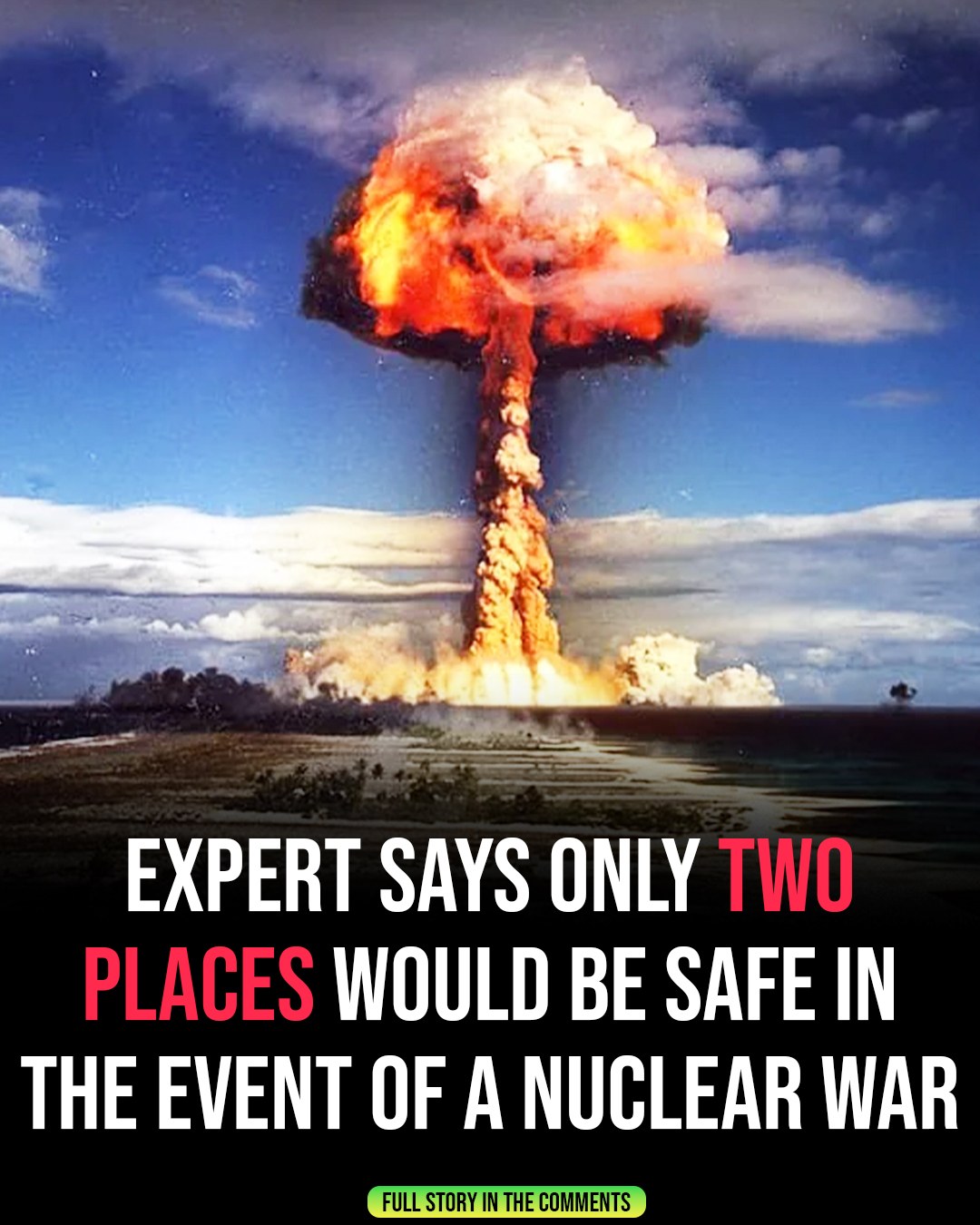
In the midst of rising global tensions — including recent airstrikes and military confrontation involving major world powers — many Americans understandably wonder:
if a nuclear‑armed conflict were ever to escalate into a wider war, where in the United States would people have the best prospects of survival?
What follows is a grounded, evidence‑based exploration of nuclear arsenals, strategic targets, the science of fallout and climate effects, and expert analysis on geographical factors that influence survival outcomes.
How Nuclear War Is Discussed in Modern Context
During the Cold War, schools in the United States conducted “duck and cover” drills — exercises designed to teach children how to protect themselves in the event of a nuclear blast.
Conceived in the 1950s amid fears of Soviet intercontinental nuclear strikes, these drills conveyed the notion of preparedness, even though modern experts acknowledge they offered only limited real protection against an actual nuclear explosion.
Today, strategic nuclear war planning has grown far more sophisticated, and the geopolitical landscape has changed.
While the Cold War focus was on the Soviet Union as a peer nuclear rival, contemporary nuclear risk discussions involve multiple nuclear‑armed states with varying doctrines, delivery systems, and arsenals.
Experiencing heightened tensions — whether fueled by nuclear proliferation concerns, regional conflicts, or strategic deterrence doctrines — can revive public anxiety about potential nuclear threats.
However, accurate nuclear risk evaluation still depends on geopolitical analysis and scientific modelling, not speculation.
Where Nuclear Weapons Are in the United States (and Why That Matters)
The U.S. Nuclear Arsenal: Numbers and Structure
As of the most recent expert assessments, the U.S. maintains one of the world’s largest nuclear arsenals — though far smaller than Cold War peak levels. According to estimates compiled by defense analysts and open‑source treaty data:
-
The U.S. nuclear stockpile is thought to include around 3,700 warheads as part of the military stockpile, with additional retired warheads awaiting dismantlement.
-
Of those, roughly 1,700 or so are considered “deployed” strategic warheads — meaning they are on missiles, submarines, or bombers ready for potential use at short notice.
-
The United States also fields nuclear gravity bombs and strategic weapons capable of delivery from aircraft.
These warheads are distributed across the nation in various forms as part of the U.S. nuclear triad — the combination of land‑based intercontinental ballistic missiles (ICBMs), submarine‑launched ballistic missiles (SLBMs), and strategic bombers that together form the backbone of U.S. nuclear deterrence.
Primary Locations of U.S. Nuclear Forces
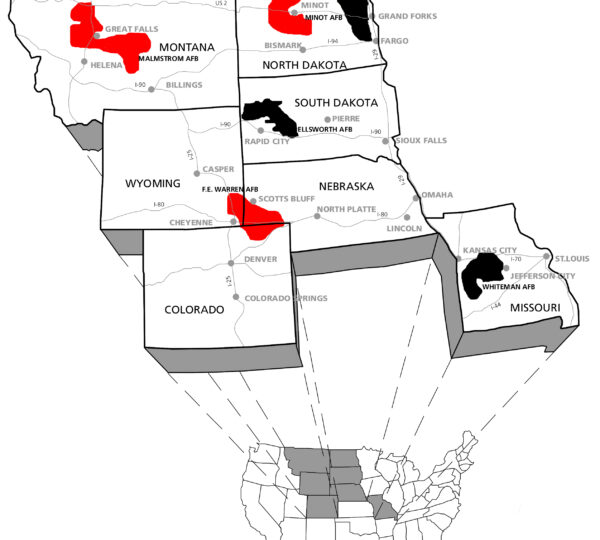
Although exact locations are sensitive and partially classified, open‑source and expert estimates identify many key sites:
-
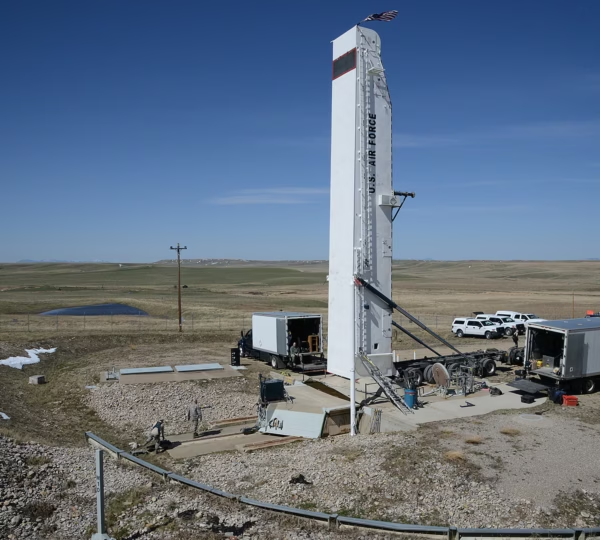
Land‑based ICBM fields in the Great Plains region — including Malstrom Air Force Base (Montana), Minot Air Force Base (North Dakota), and other silo clusters across Montana, Wyoming, Nebraska, and the Dakotas.
-
Ballistic missile submarines, which patrol at sea but are based at Naval Submarine Base Kitsap in Washington and Naval Submarine Base Kings Bay in Georgia.
-
Strategic bomber bases in the continental United States.
-
Additional storage and maintenance facilities — including large munitions complexes near Albuquerque, New Mexico, and the Pantex Plant in Texas.
This distribution reflects decades of strategic planning emphasizing redundancy — ensuring that nuclear forces cannot be neutralized by a single strike and that at least some forces remain intact under various conflict scenarios.
What Would Happen in a Nuclear Exchange: Blast, Fallout, and Radiation
Direct Effects vs. Indirect Consequences
In a hypothetical nuclear exchange involving U.S. soil, two broad categories of hazard must be considered:
-
Direct effects — the explosion itself: intense heat, shock waves, and immediate radiation near ground zero.
-
Indirect effects — radioactive fallout, climate impact, food disruption, and social collapse.
Many people imagine that any nuclear war automatically leads to a global apocalypse.
However, modern nuclear planners and climate researchers stress that outcomes vary widely depending on the number of warheads used, their yields, and whether detonations occur above ground or at ground level (ground bursts produce more radioactive fallout than high‑altitude detonations).
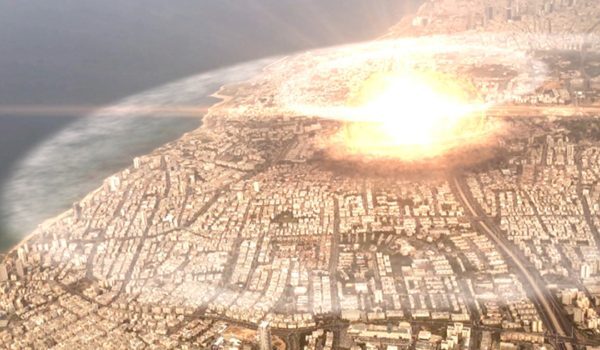
These factors strongly influence the extent and distribution of radioactive material.
Fallout and Radiation Risk
Radioactive fallout — the particles that settle after a nuclear blast — is a major driver of danger beyond the initial blast zone. Fallout can expose populations to ionizing radiation, which can damage tissues and increase cancer risk.
Historically, fallout has been observed after atmospheric nuclear tests, spreading particulate matter across wide areas and even crossing borders far from blast sites.
In the event of a planned nuclear war, missile silos and military targets would likely be among the first strategic targets due to their military significance.
Directed attacks on these facilities would cause localized but intense radioactive fallout. Open‑source modelling and civil defense research during the Cold War showed that areas surrounding nuclear target clusters — especially in rural.
Flat landscapes where ICBM silos are located — would experience high radiation exposure if struck or if high‑yield detonation occurred nearby.
The distribution of risk depends heavily on wind patterns, weather at the time of detonation, and the height at which warheads detonate. Fallout plumes can travel hundreds of miles, meaning people far outside immediate blast zones could still face elevated radiation levels without effective shelter.
What Matters for Survival — Geography and Preparedness
States with Lower Immediate Risk?
While no location in the U.S. is guaranteed safe in a large‑scale nuclear exchange, analysts identify factors that can reduce immediate exposure risk:
-
Distance from known nuclear weapons sites — places far from silo fields, strategic bases, and major population centers tend to face lower risk of direct strikes.
-
Prevailing wind patterns — in many parts of the U.S., winds tend to travel from west to east, meaning fallout from a detonation in the central plains could move eastward under typical conditions.
-
Population density and strategic importance — highly populated metro areas, major ports, and military command centers are higher‑order targets and thus riskier in a strategic exchange.
Based on these factors, analyses suggest that the U.S. states farthest from strategic nuclear infrastructure and major population centers could offer comparatively lower risk — at least for the initial phase of a conflict. These tend to include:
-
Much of the Southeast — Georgia, Florida, Alabama, Mississippi, South Carolina, and neighboring states;
-
Parts of the Northeast and Mid‑Atlantic — including Maine, New Hampshire, Vermont, Massachusetts, Connecticut, and Pennsylvania;
-
Some areas of the Upper Midwest and Great Lakes region — such as Michigan and Ohio;
-
Parts of the Southwest and Intermountain West — including New Mexico, Utah, and southern Colorado, where there are fewer known early‑phase nuclear targets.
These relative assessments do not imply safety from all consequences — especially because fallout, supply disruption, and cascading social effects cannot be ruled out even at great distance from blast sites.
Importantly, these are comparative risk evaluations — not guarantees of survival. There is no truly “safe” place in a large‑scale nuclear war scenario, only differences in degrees of exposure probability.
What Happens After the Blasts: Long‑Term and Global Effects
Nuclear Winter and Climate Impacts
One of the most serious and widely studied potential consequences of a large nuclear conflict is nuclear winter — a substantial drop in global temperatures caused by smoke and soot injected into the upper atmosphere by widespread firestorms.
Scientific modelling since the 1980s, and continuing into modern climate research, indicates that a significant nuclear exchange involving hundreds of weapons could inject enough aerosol particles into the stratosphere to reduce sunlight reaching the surface, severely cooling global temperatures for years.
Lower temperatures and reduced sunlight would depress agricultural yields and could trigger widespread food shortages.
Published research on corn and other staple crop production shows that even partial nuclear war scenarios could reduce crop yields by large percentages, raising the prospect of famine in vulnerable regions.
While models vary — and some studies emphasize uncertainty about how long particles remain aloft — most climate scientists agree that serious nuclear exchanges would at minimum disrupt climate and agriculture for extended periods.
Survival Beyond Geography: Food, Infrastructure, and Society
Even in areas not directly hit by weapons, food supply chains, electricity grids, transportation networks, healthcare systems, and social stability would be strongly affected by widespread devastation. Experts caution that in a nuclear war:
-
Food scarcity and economic disruption could cause far more casualties than the blasts themselves.
-
Public health challenges — including radiation sickness, contaminated water, and disease — would stretch medical systems thin or collapse them entirely in some regions.
-
Governance and civil order could break down if communication and supply networks fail.
In other words, surviving the initial moments of a nuclear conflict is only part of the challenge — surviving the aftershocks in a socially disrupted world is equally critical.
Global Escape? The Southern Hemisphere and Long‑Term Refuge
Some analysts and disaster planners have looked beyond national borders for long‑term survival scenarios.
Because nuclear war impacts — especially climate effects — would be most severe in the densely populated and highly targeted Northern Hemisphere, regions in the Southern Hemisphere could, in theory, experience milder fallout patterns and less direct impact on agriculture and infrastructure.
Countries like Australia and New Zealand are frequently mentioned in academic and advocacy discussions as possible long‑term refuges due to:
-
Their distance from major nuclear powers and strategic targets.
-
Their relative isolation from Northern Hemisphere fallout plumes in many nuclear conflict models.
-
Their robust agricultural sectors and self‑sustaining food production capacity.
These considerations do not imply immunity — they simply reflect how long‑term climate and food supply dynamics could play out compared to heavily targeted Northern Hemisphere nations.
Conclusion: Survival Is Complex, Not Binary
There is no simple answer to “Where in America could you survive a nuclear war?” Instead:
-
Risk is a matter of degree. Geography, wind patterns, population density, and how many weapons are used all affect exposure.
-
No state is completely safe in a large‑scale nuclear conflict, though some have comparatively lower target likelihood.
-
Long‑term survival depends on more than escaping initial blasts — food security, infrastructure resilience, governance continuity, and climate effects all shape outcomes.
-
The best “survival strategy” remains political and diplomatic: reducing the likelihood of nuclear conflict through arms control, diplomacy, prevention, and international cooperation.
For most Americans, the most effective way to protect life is not to prepare for nuclear war as an inevitability but to support policies that reduce nuclear weapons risks altogether and build resilience in infrastructure, public health, and global partnerships.