
For decades, Julia Roberts was synonymous with Hollywood glamour. Audiences around the world came to associate her with radiant smiles, elegant red-carpet appearances.
And a screen presence defined by charm and accessibility. From romantic comedies that shaped an era to high-profile dramatic roles, she built a career that balanced commercial success with critical respect.
Because of this carefully established public image, the moment she appeared on the set of August: Osage County looking almost unrecognizable, it immediately captured attention—not because it was shocking, but because it was so intentional.
Rather than relying on her established star persona, Roberts made a conscious decision to strip away every trace of polish and familiarity.
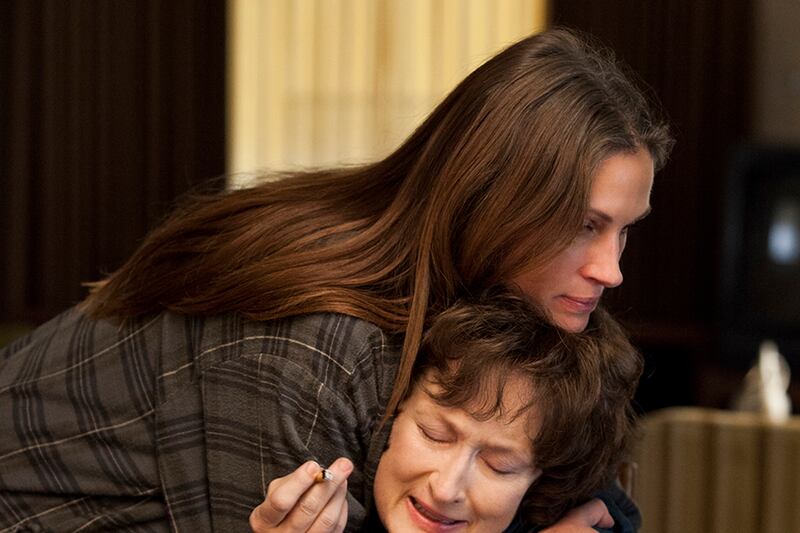
This was not a cosmetic transformation designed to generate headlines, but a deliberate artistic choice rooted in the demands of the story.
The film, based on Tracy Letts’ Pulitzer Prize–winning play, is an emotionally intense examination of grief, dysfunction, and long-suppressed family conflict.
To portray Barbara Weston authentically, Roberts understood that glamour would not only be unnecessary—it would be distracting. From the earliest days of filming, it became clear that Roberts was not interested in being seen as a movie star playing a role.
Instead, she aimed to inhabit the emotional reality of a woman under extraordinary pressure. Barbara Weston is a character defined by contradictions: strong yet deeply wounded, confrontational yet vulnerable, controlled on the surface but unraveling internally.
Capturing those layers required more than dialogue or dramatic moments; it required a complete physical and emotional commitment. On location in Oklahoma, where much of the film was shot, Roberts embraced a deliberately understated appearance.
Her wardrobe consisted largely of simple jeans, muted tops, and layered clothing that reflected the practical, unadorned life of her character.
Hair and makeup were kept minimal, allowing natural lines of stress, fatigue, and emotion to remain visible on screen. The result was a version of Julia Roberts that audiences were unaccustomed to seeing—one that felt grounded, real, and inseparable from the story being told.
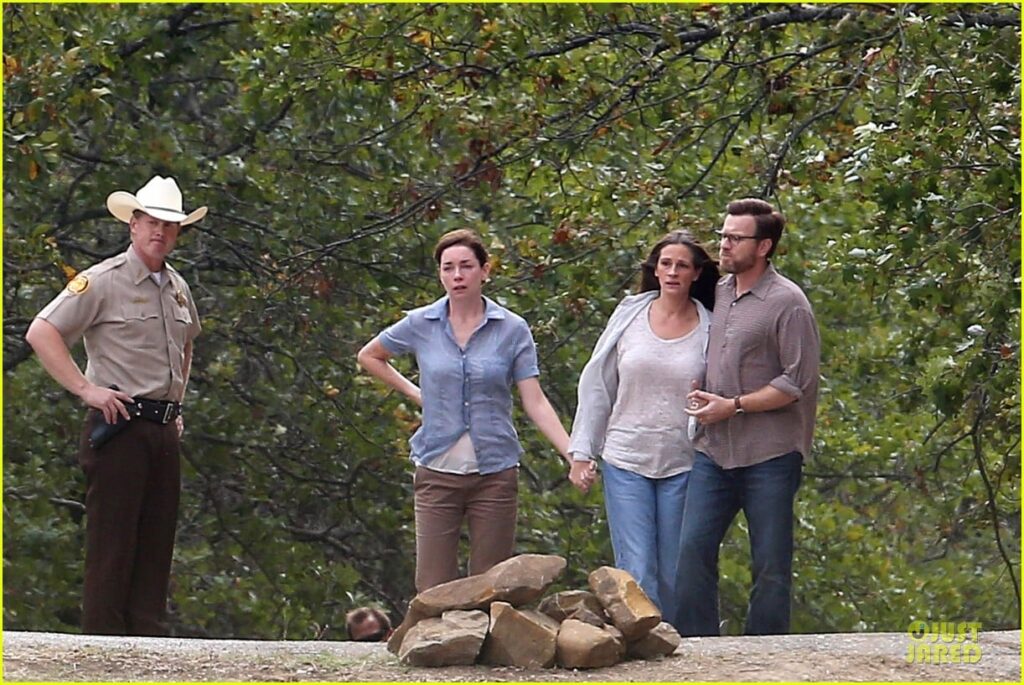
This visual transformation closely mirrored Barbara Weston’s emotional state. The character returns to her childhood home following a profound personal loss, forcing her to confront unresolved tensions with her parents and siblings.
Rather than masking that turmoil, Roberts allowed it to surface openly. Her expressions, posture, and physical presence conveyed exhaustion and suppressed anger, reinforcing the sense that Barbara is carrying years of emotional weight. By abandoning any concern for conventional screen beauty,
Roberts ensured that the audience’s focus remained on the character’s internal struggle rather than on her celebrity.
The decision proved crucial in establishing the film’s tone. August: Osage County is a story driven not by spectacle, but by dialogue, silence, and emotional confrontation.
Each character brings years of resentment and pain into a confined family setting, and authenticity is essential for those dynamics to resonate.
Roberts’ refusal to soften Barbara’s edges or make her more palatable underscored the film’s commitment to realism. Her performance signaled to both cast and audience that this was a story that demanded honesty above all else.
Working alongside an ensemble cast that included Meryl Streep, Ewan McGregor, and other respected performers, Roberts matched intensity with restraint.
The production environment was described by those involved as focused and demanding, given the emotionally heavy material.

Yet within that environment, Roberts’ approach helped establish trust and cohesion. By fully committing to the character, she reinforced a shared understanding that no one was there to protect an image—only to serve the story.
One of the film’s central relationships is Barbara’s strained marriage, portrayed opposite Ewan McGregor. Their scenes together required a careful balance of emotional openness and subtlety.
The marriage depicted is not defined by dramatic outbursts alone, but by years of accumulated tension, disappointment, and unspoken grief.
Roberts approached these moments with restraint, allowing discomfort and silence to communicate as much as dialogue. Her performance avoided exaggeration, instead relying on small, human reactions that felt deeply familiar to anyone who has experienced long-term emotional strain.
In particularly demanding scenes, Roberts allowed herself to appear emotionally exposed, even fragile. Moments of breakdown were not framed as dramatic showcases, but as inevitable releases of pressure.
This approach reinforced the character’s humanity and prevented the performance from feeling calculated or performative.
It was clear that Roberts was less concerned with how the scene looked and more concerned with whether it felt true.
Despite the heavy subject matter, accounts from the set later revealed a striking contrast between the emotional intensity on camera and the atmosphere between takes.
Cast and crew members noted that Roberts was able to step out of character quickly, sharing laughter and maintaining a sense of balance during long shooting days.

This ability to compartmentalize emotional labor while remaining professional highlighted her experience and discipline as an actress. It also contributed to a supportive environment on a production that demanded emotional vulnerability from everyone involved.
As filming progressed, it became increasingly evident that Roberts’ transformation was central to the film’s impact. She did not seek to dominate scenes or draw attention through dramatic gestures. Instead, she allowed the character to exist within the ensemble, sometimes abrasive, sometimes wounded, but always believable.
This choice reinforced the story’s core theme: that family conflict is rarely clean or heroic, and that pain often manifests in uncomfortable, imperfect ways. By the time August: Osage County neared completion, Roberts’ work had already begun to reshape perceptions of her career.
Long admired for her charisma, she was now being discussed in terms of risk-taking and emotional depth. Industry observers noted that her willingness to abandon her iconic image demonstrated confidence rather than insecurity—a sign of an actress secure enough in her legacy to prioritize artistic truth over familiarity.
When August: Osage County was released, much of the early conversation centered on its performances rather than its scale or spectacle. Critics and audiences alike recognized that the film depended heavily on the emotional credibility of its cast, and Julia Roberts’ transformation quickly emerged as one of its most discussed elements.
For many viewers, seeing her step so far away from her established screen persona was both surprising and compelling, reinforcing the seriousness of the project and the risks she was willing to take.
Reviews frequently highlighted the intensity and honesty of Roberts’ portrayal of Barbara Weston. Rather than softening the character’s harshness or making her more conventionally sympathetic, Roberts leaned into Barbara’s flaws.
Critics noted that this approach gave the character a sense of realism that resonated strongly, even when her actions were uncomfortable or confrontational. The performance was widely described as emotionally grounded, with particular praise for Roberts’ ability to convey anger, grief, and exhaustion without relying on melodrama.

Award recognition soon followed, with Roberts receiving nominations from major industry organizations. While awards alone do not define a performance’s legacy, the attention confirmed that her work had made a significant impression within the film community.
More importantly, it reminded both audiences and critics that Roberts’ range extended far beyond the roles that initially made her famous. Her work in August: Osage County was seen as part of a broader pattern of choosing challenging material later in her career, prioritizing depth and complexity over familiarity.
The ensemble nature of the film also played a crucial role in how her performance was received. Acting opposite Meryl Streep, who portrayed the family’s formidable matriarch, required precision and restraint.
Rather than competing for attention, Roberts allowed the dynamic between the characters to unfold naturally, creating scenes that felt volatile yet controlled. Observers noted that this balance strengthened the film as a whole, demonstrating Roberts’ ability to collaborate within a demanding ensemble without sacrificing the individuality of her character.
In the years following the film’s release, August: Osage County has continued to be referenced as a defining moment in Roberts’ career. Film scholars and critics often cite it as an example of how established stars can successfully reinvent themselves by embracing vulnerability and creative risk.
Unlike transformations driven primarily by physical alteration, Roberts’ work stood out because it was rooted in emotional authenticity and narrative purpose. The absence of glamour was not a statement in itself, but a tool that allowed the character’s inner life to take center stage.
From a broader industry perspective, the performance contributed to ongoing discussions about how actresses navigate aging and expectations in Hollywood. Roberts’ choice to appear unpolished and emotionally exposed challenged conventional assumptions about how leading women should be presented on screen.
Rather than diminishing her presence, this approach reinforced her credibility and longevity, suggesting that authenticity can be as compelling as traditional star appeal. Audiences revisiting the film years later often comment on how well the performance holds up over time.
The themes of family conflict, grief, and unresolved resentment remain relatable, and Roberts’ portrayal continues to feel relevant rather than dated. Her ability to convey emotional complexity without relying on trends or stylization has helped ensure the film’s lasting impact.
This durability is frequently cited as evidence of the performance’s strength and sincerity. Behind the scenes, Roberts’ professionalism during the production has also become part of the film’s narrative.
Reports from cast and crew consistently describe her as fully prepared, emotionally invested, and respectful of the collaborative process. Her ability to transition between intense scenes and lighter moments off camera helped maintain morale during a demanding shoot.
This balance between emotional commitment and practical discipline is often cited as a hallmark of experienced performers who understand the long-term demands of serious dramatic work. Looking back, August: Osage County represents more than a single successful role.
It reflects a broader artistic philosophy that Roberts has increasingly embraced: choosing stories that challenge her and trusting audiences to follow her into less comfortable territory.
By prioritizing truth over image, she reinforced the idea that star power does not need to be diminished to achieve realism—instead, it can be redirected toward more meaningful storytelling.
Today, the film is frequently included in discussions of Roberts’ most important dramatic performances. While her career includes many beloved and iconic roles, August: Osage County stands apart because of the clarity of purpose behind her choices.
It illustrates how an actress with nothing left to prove can still find new ways to surprise audiences by committing fully to the demands of a story.
Ultimately, Julia Roberts’ transformation in August: Osage County serves as a reminder of why she remains one of Hollywood’s most respected figures.
By allowing herself to disappear into a role defined by grief, tension, and emotional conflict, she demonstrated that vulnerability can be a source of strength rather than risk.
More than a decade later, the performance continues to resonate—not because it rejected glamour, but because it embraced honesty, reinforcing the enduring power of thoughtful, character-driven acting.