Minneapolis is facing renewed shock and anger following a deadly encounter between a federal Immigration and Customs Enforcement (ICE) agent and a local woman.
An incident that has sparked nationwide outrage and intense debate over the use of force during federal immigration operations.
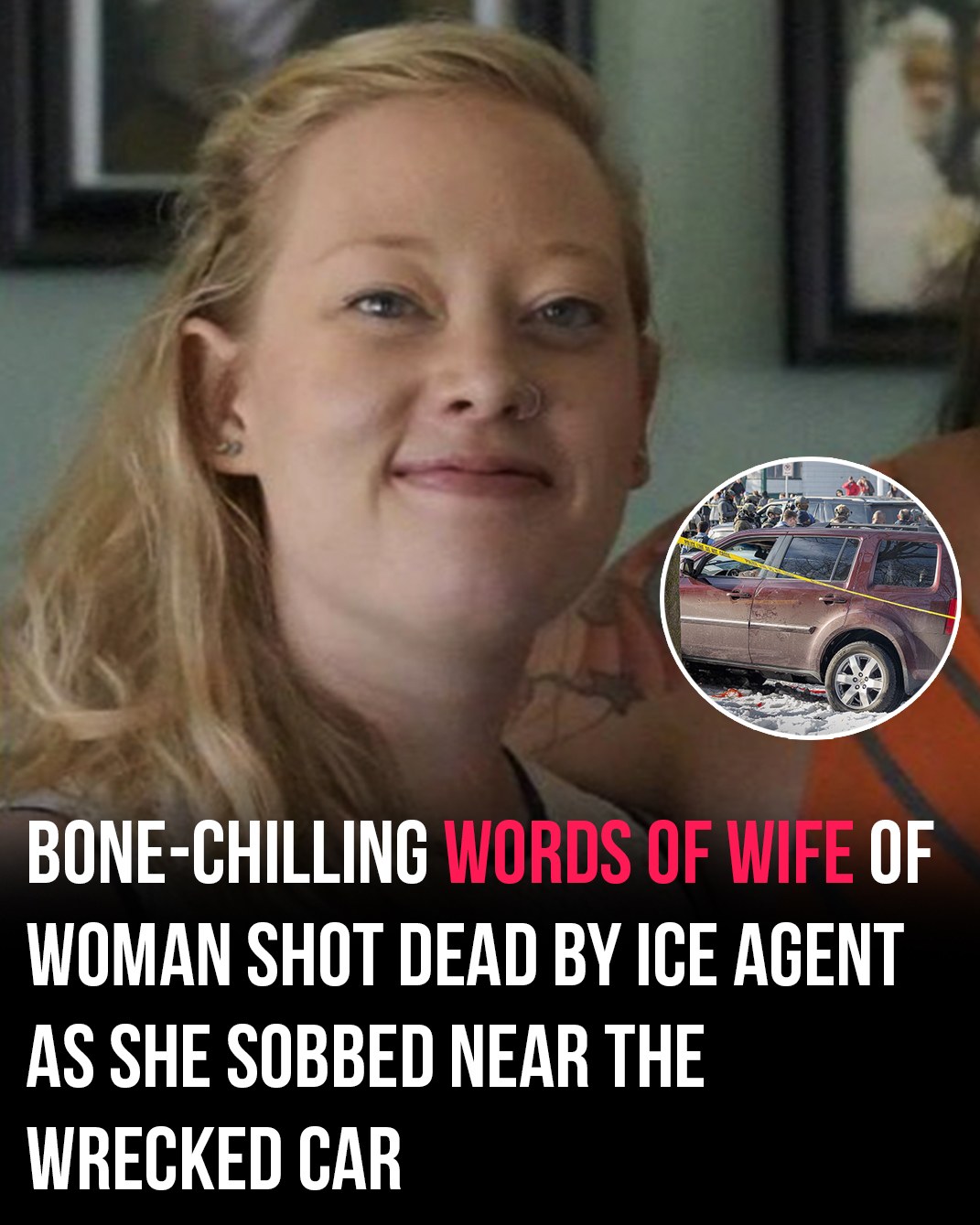
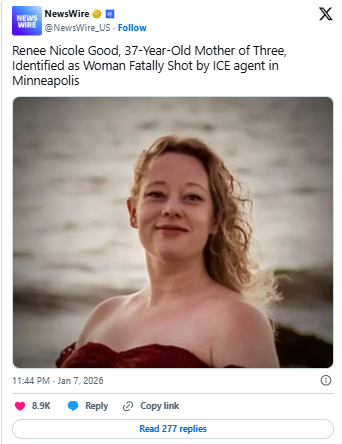
The victim, 37-year-old Renee Nicole Good, was a Minneapolis resident, a poet, a musician, and a mother whose sudden death has left her family, friends, and neighbors struggling to process an unimaginable loss.
What began as a routine morning in a residential neighborhood ended in tragedy, raising serious questions about accountability, transparency, and public safety.
The Morning of the Shooting
The fatal incident occurred on the morning of January 7, 2026, in south Minneapolis, during a federal immigration enforcement operation.
According to available video footage and eyewitness accounts, the confrontation unfolded near the intersection of 34th Street and Portland Avenue, an area known for its close-knit residential community.
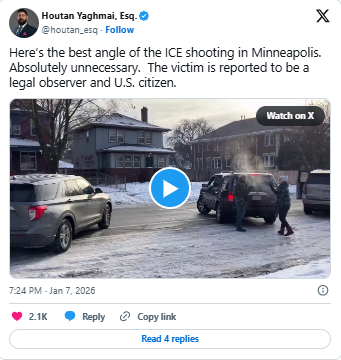
Video circulating online shows a burgundy SUV surrounded by multiple ICE officers. Within moments, gunfire erupted.
The vehicle then crashed into a light pole and several parked cars, coming to rest with visible bullet holes in the driver’s-side windshield. The scene quickly descended into chaos as emergency responders and bystanders gathered on the icy street.
Moments after the shooting, an emotionally devastating scene unfolded. Good’s wife, visibly covered in blood and clearly distraught, was seen crying uncontrollably at the scene.
In footage shared widely on social media, she can be heard sobbing, “I made her come down here, it’s my fault. They just shot my wife.”
According to reporting by the New York Post, Good’s wife had been filming federal agents shortly before the shooting and rushed toward the vehicle immediately after gunfire was heard. The images and video from the scene have since become central to the public debate surrounding the incident.
Federal Authorities Claim Self-Defense
In the hours following the shooting, federal officials defended the actions of the ICE agent involved, asserting that the use of lethal force was justified. The Department of Homeland Security (DHS) released a statement claiming that the officer fired in self-defense.
DHS spokesperson Tricia McLaughlin stated that an ICE officer, “fearing for his life, the lives of his fellow officers, and the lives of the public,” fired defensive shots during the encounter.
According to the statement, the officer acted according to his training and prevented further harm.
“The alleged perpetrator was hit and is deceased,” McLaughlin said. “Thankfully, the ICE officers who were hurt are expected to make full recoveries.”
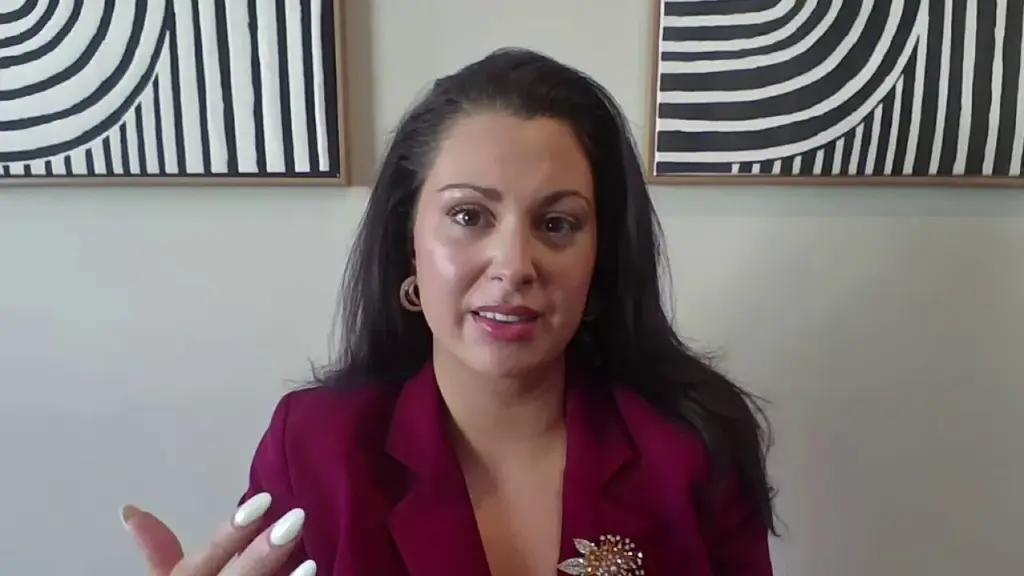
DHS Secretary Kristi Noem later reinforced the department’s position, claiming that Good had been “stalking and impeding” federal agents prior to the shooting. She described the incident as “preventable” while continuing to defend the actions taken by ICE officers at the scene.
Speaking at a press conference alongside U.S. Customs and Border Protection Commander Gregory Bovino, Noem acknowledged the gravity of the loss but emphasized the department’s stance.
“Any loss of life is a tragedy, and I think all of us can agree that, in this situation, it was preventable,” Noem said.
Political Reactions and Controversy
The incident quickly escalated into a national political flashpoint. President Donald Trump weighed in, describing Renee Nicole Good as “very disorderly, obstructing and resisting.” He further alleged that she attempted to run over an ICE officer, whom he claimed was “recovering in the hospital.”
However, these assertions were met with skepticism, particularly as video evidence appeared to show at least one ICE agent walking around the scene without visible injuries. The discrepancy between official statements and video footage intensified public criticism and fueled calls for an independent investigation.
Strong Pushback From City and State Leaders
Local and state officials strongly disputed the federal government’s account of events. Minneapolis Mayor Jacob Frey delivered one of the most forceful responses, openly rejecting DHS claims.
Calling the situation “bulls***,” Frey said federal agents were “ripping families apart” and “sowing chaos” in Minneapolis neighborhoods. “In this case,” he added, “they are quite literally killing people.”
Minnesota Governor Tim Walz also criticized the federal response, describing it as “governing by reality TV.” Walz called for a full, fair, and transparent investigation into the shooting, emphasizing the need for accountability when federal force results in civilian deaths.
The sharp divide between federal officials and local leadership underscored broader tensions surrounding immigration enforcement, states’ rights, and community trust in law enforcement agencies.
A City Demanding Answers
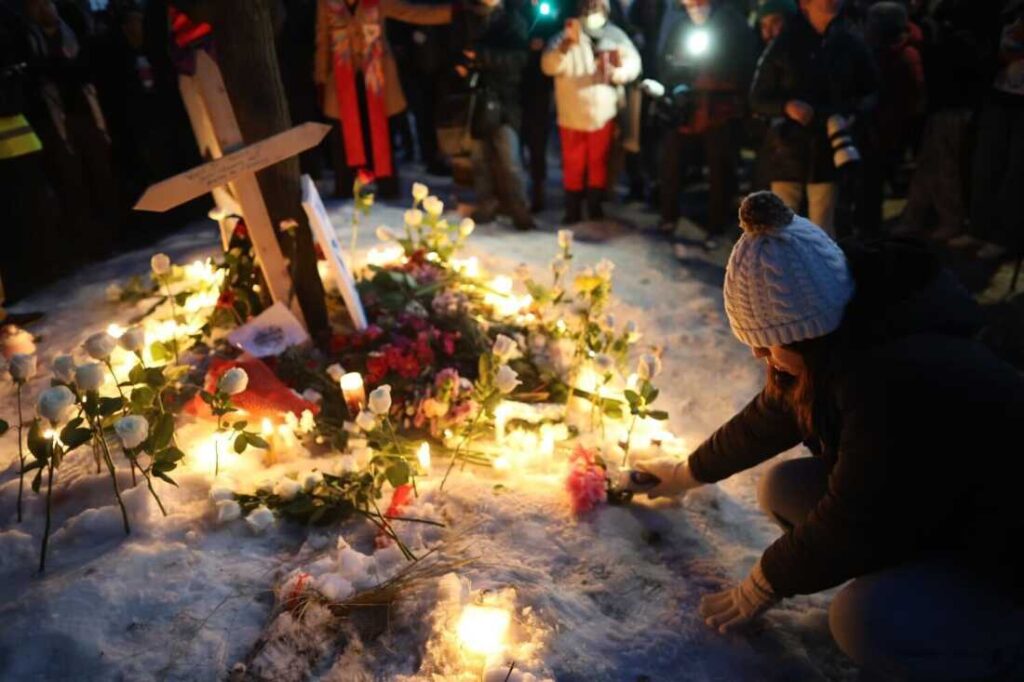
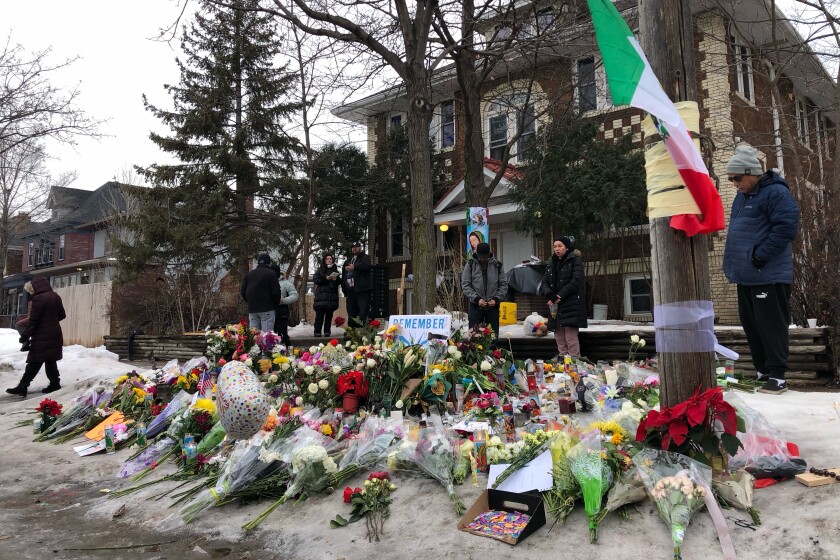
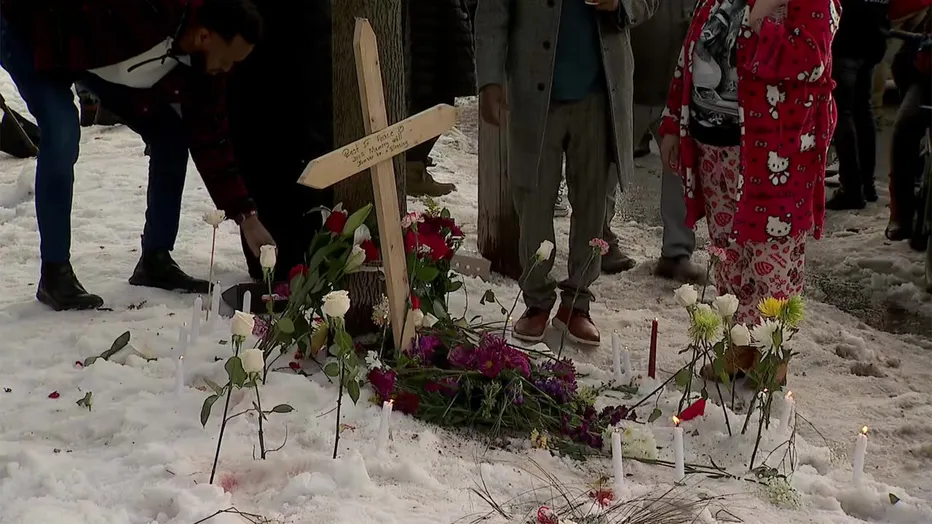
As news of the shooting spread, anger and grief rippled throughout Minneapolis. Community members gathered near the site of the incident, leaving flowers, candles, and handwritten messages honoring Renee Nicole Good. Advocacy groups and city leaders echoed calls for clarity regarding what happened in the moments before shots were fired.
While federal authorities labeled the situation a case of self-defense, critics argued that many questions remain unanswered. The presence of video footage, conflicting witness accounts, and political statements from multiple levels of government have only heightened public demand for transparency.
As Minneapolis continues to grapple with the aftermath of the fatal shooting, many have emphasized that Renee Nicole Good was far more than a name in a breaking news headline. To those who knew her personally, she was a devoted parent, a creative spirit, and a compassionate presence within her community.
A Life Rooted in Creativity and Care
Good was a mother of three, a poet, a musician, and a longtime Minneapolis resident who was deeply engaged with those around her.
On social media, she described herself with humility and humor as a “poet and writer and wife and mom and shitty guitar strummer from Colorado; experiencing Minneapolis, MN.” Friends say this description reflected her personality — creative, self-aware, and grounded.
Her mother, Donna Ganger, spoke emotionally about her daughter in an interview with the Minnesota Star Tribune, describing Good as someone who spent her life caring for others. “She was extremely compassionate,” Ganger said. “She’s taken care of people all her life. She was loving, forgiving, and affectionate. She was an amazing human being. She was probably terrified.”
Those words have resonated deeply with community members, many of whom have struggled to reconcile the image of a gentle, caring person with the violent circumstances of her death.
A Family Facing an Unimaginable Loss
In the wake of Good’s death, her family is now facing the painful reality of moving forward without her. Loved ones have spoken openly about their concern for her youngest child, a six-year-old, who must now grow up without his mother.
Timmy Ray Macklin Sr., the father of Good’s late former husband, expressed deep worry for his grandchild. “There’s nobody else in his life,” he said. “I’ll drive. I’ll fly. To come and get my grandchild.”
These statements highlight the far-reaching consequences of the shooting, which extend well beyond the immediate scene. Family members and close friends have emphasized that the loss is not only emotional but also practical, as loved ones work to provide stability and care in the aftermath.
Neighbors and Friends Speak Out
Residents of the south Minneapolis neighborhood where the shooting occurred described Good and her family as warm, approachable, and closely connected to the community. Mary Radford, a 27-year-old neighbor who lived next door, recalled seeing the family frequently outdoors together.
“It’s a beautiful family,” Radford said. “They have a son. He’s very sweet. They’re always outside playing. We’re gonna miss seeing them — forever. It is so painful to think about how he’s gonna fare in his life. And I just can’t even imagine what that family is going through.”
Another friend, Megan Kocher, who had visited Good just weeks before her death, shared a personal memory that captured Good’s generosity. “She fed me tea and cookies at her house while we talked about school stuff,” Kocher said. “She was such a warm and loving mother. This is tragic beyond words.”
These accounts paint a picture of a woman whose life was defined by kindness, creativity, and meaningful relationships.
Unresolved Questions About the Incident
Despite statements from federal authorities, many questions remain unanswered about what exactly occurred in the moments leading up to the shooting. DHS confirmed that Good’s SUV, registered in Missouri under the name Renee N. Good Macklin, was moving during the encounter, though officials have not explained why the vehicle was registered out of state.
DHS labeled the incident as “domestic terrorism,” alleging that Good attempted to “weaponize her vehicle” against ICE agents. This characterization has drawn strong criticism from city leaders, civil rights advocates, and members of the public who argue that such language is both inflammatory and premature.
Local officials have emphasized that video footage and witness statements appear to contradict elements of the federal narrative, particularly claims regarding officer injuries and immediate threats to public safety.
Calls for Accountability and Investigation
The shooting prompted swift responses from Minneapolis city leaders. Members of the Minneapolis City Council released a joint statement condemning the killing and calling for accountability.
“This morning an ICE agent shot and killed Renee Nicole Good, a member of our community,” the statement read. “Anyone who kills someone in our city deserves to be arrested, investigated, and prosecuted to the fullest extent of the law.”
State Senator Omar Fateh also raised serious concerns in a post on X, stating that he had received reports suggesting federal agents blocked a doctor from administering potentially life-saving CPR at the scene. Fateh, along with Mayor Frey, city council members, and local faith leaders, visited the site of the shooting shortly after it occurred.
While federal authorities have not confirmed these allegations, the claims have intensified demands for a transparent, independent investigation into the actions of ICE officers and emergency response procedures.
A Community in Mourning
In the days following the shooting, Minneapolis residents gathered for vigils and memorials, leaving flowers, candles, and handwritten notes in honor of Good’s life. Many described the atmosphere as one of shared grief, anger, and disbelief.
For many in the city, the incident has reopened painful conversations about policing, federal authority, and community safety. It has also reinforced calls for clearer oversight and accountability when federal operations intersect with civilian lives.
A Lasting Impact
Renee Nicole Good’s death has left an indelible mark on her family and her city. As investigations continue and political debates unfold, those closest to her hope that public attention does not lose sight of who she was as a person.
She was a mother, a writer, a neighbor, and a loved one whose life mattered deeply to many. While the legal and political implications of her death remain unresolved, her memory endures through the people she cared for and the community that continues to mourn her loss.