
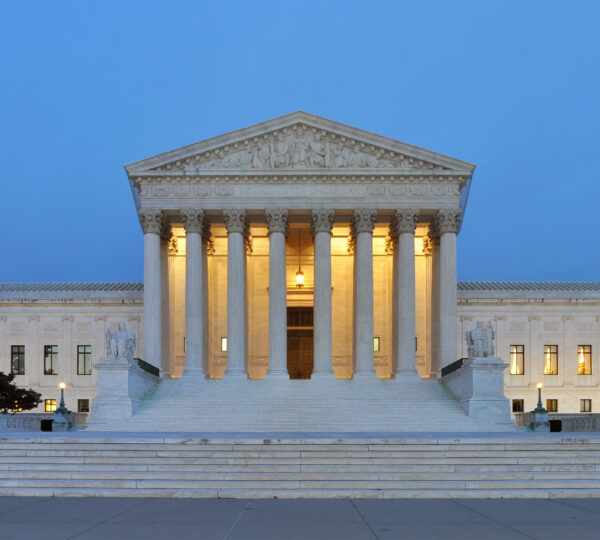
A recent ruling by the United States Supreme Court has significantly reshaped the legal environment surrounding immigration protections.
Particularly the future of Temporary Protected Status (TPS) for certain migrant populations. In its decision, the Court lifted a lower court injunction that had temporarily blocked.
The federal government from proceeding with changes to the legal status of hundreds of thousands of migrants living in the United States under TPS protections. While the ruling does not determine the final outcome of TPS policy for affected individuals.
It removes an important legal obstacle and restores broader discretion to federal authorities.
The decision has attracted widespread attention because of its implications not only for immigration policy, but also for executive authority, judicial oversight, and the everyday lives of individuals and families who have relied on TPS for years.
At its core, the case highlights long-standing tensions within the U.S. immigration system—between temporary humanitarian relief and the absence of permanent legislative solutions.
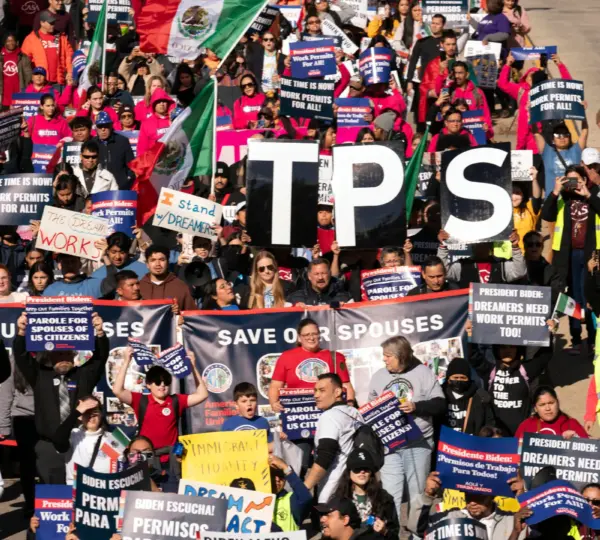
Understanding Temporary Protected Status (TPS)
Temporary Protected Status is a humanitarian immigration program created by Congress in 1990 as part of the Immigration Act.
It authorizes the Secretary of Homeland Security to grant temporary legal status to nationals of specific countries when extraordinary conditions make safe return impractical or unsafe.
Those conditions may include armed conflict, environmental disasters, public health emergencies, or other severe humanitarian crises.
TPS is intended to provide temporary relief during periods of instability, rather than a permanent immigration pathway.
Individuals granted TPS are protected from removal while the designation remains active and may apply for authorization to work legally in the United States.
However, TPS does not provide lawful permanent residence, citizenship, or an automatic path to either. Its protections last only as long as the designation remains in effect.
TPS designations are country-specific and time-limited, typically lasting between six and eighteen months. At the end of each period, the Department of Homeland Security (DHS) must review current country conditions and determine whether the designation should be extended, redesigned, or terminated.
These decisions are discretionary but must align with statutory criteria.
Background of the Supreme Court Case
The legal dispute that reached the Supreme Court centered on whether the executive branch may alter or terminate TPS designations without judicial interference when it determines that underlying conditions no longer justify continued protection.
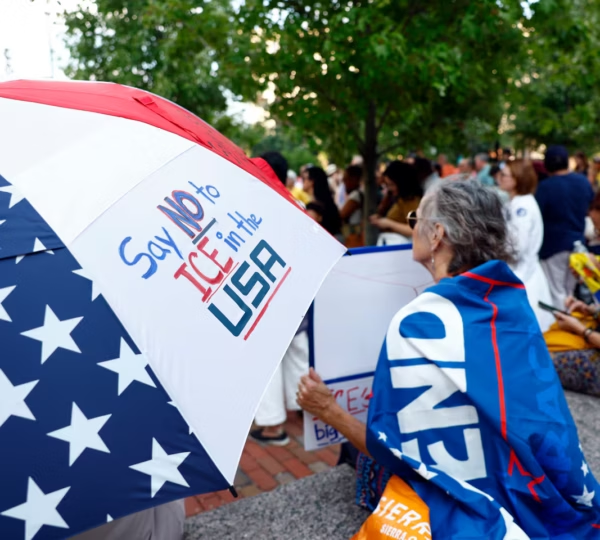
A federal district court had previously issued an injunction blocking the administration from ending TPS protections for a specific group of migrants.
That injunction effectively paused policy implementation while legal challenges continued. Plaintiffs argued that the termination process raised legal and procedural concerns and that sudden changes could cause irreparable harm to affected individuals.
The federal government appealed, asserting that the lower court had overstepped its authority by preventing the executive branch from exercising discretion granted by Congress.
The Supreme Court agreed to review the request to lift the injunction—not to decide the ultimate legality of TPS termination, but to determine whether the lower court’s order should remain in effect while litigation proceeds.
The Supreme Court’s Decision
In its ruling, the Supreme Court lifted the injunction, allowing the federal government to move forward with administrative actions related to TPS. The Court emphasized that its decision addressed a procedural issue rather than the final merits of the case.
The ruling concluded that immigration decisions involving TPS fall within an area where the executive branch holds significant discretion, particularly when those decisions involve assessments of foreign conditions and national interest.
The Court determined that the lower court’s injunction imposed an undue restriction at an early stage of litigation.
Importantly, the decision does not resolve whether the TPS termination itself is lawful. Legal challenges may continue in lower courts, and future rulings could still shape the outcome. The Court’s action simply removes a temporary legal barrier.
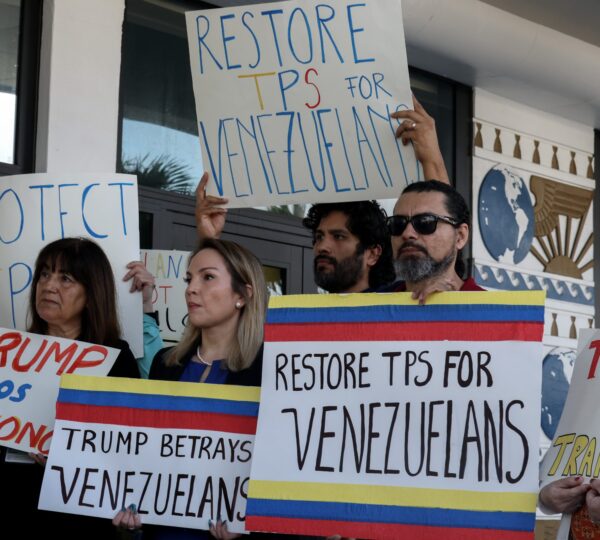
Executive Authority and Immigration Policy
U.S. immigration law operates at the intersection of congressional statutes and executive implementation. Congress establishes programs such as TPS, but delegates authority to the executive branch—specifically the Department of Homeland Security—to administer them.
Federal officials argue that TPS decisions require complex evaluations that include diplomatic considerations, national security assessments, humanitarian analysis, and interagency consultation.
These determinations, they contend, are not well suited to judicial micromanagement, especially during preliminary legal proceedings.
The Supreme Court’s ruling reflects a broader legal principle: while courts can review executive action for legality, they should exercise restraint when intervening in areas explicitly delegated by Congress.
Role of the Department of Homeland Security
The Department of Homeland Security administers TPS through the authority of the Secretary of Homeland Security.
In this case, DHS issued a memorandum concluding that certain conditions in the designated country no longer met statutory criteria for continued TPS under a specific designation.
The memorandum referenced reviews of country conditions, consultations with other federal agencies, and assessments of humanitarian and policy considerations.
DHS determined that maintaining the designation under those circumstances was no longer appropriate.
The decision also highlighted the complexity created by overlapping TPS extensions and redesignations over multiple years, which resulted in multiple cohorts of beneficiaries under different timelines.
Timeline and Policy Complexity
TPS designations often evolve over time as administrations reassess conditions. In some cases, extensions are followed by redesignations that apply to different arrival periods.
These layered decisions can create administrative and legal complexity, particularly when policies change across administrations.
In this instance, prior extensions and redesignations overlapped, leading to confusion about which protections applied to which groups. The most recent administrative action altered a previous extension, prompting legal challenges and judicial intervention.
The Supreme Court’s ruling does not endorse any specific policy choice, but it allows DHS to implement its determination while litigation continues.
Lower Court Intervention and Judicial Concerns
The district court that issued the injunction expressed concerns about the reasoning behind the termination decision and its potential impact on affected communities.
The judge cited the need for further review and questioned aspects of the administrative record.
However, the Supreme Court did not evaluate those substantive concerns. Instead, it focused narrowly on whether the injunction should remain in place during ongoing litigation.
This distinction is important: lifting the injunction does not mean the lower court’s concerns were dismissed outright. It simply means they will be addressed through the normal judicial process rather than through an immediate block on executive action.

What the Decision Does—and Does Not—Do
The scope of the ruling is often misunderstood, making clarification essential.
What the decision does:
Removes the temporary legal barrier preventing policy implementation
Allows DHS to proceed with administrative TPS actions
Reinforces executive discretion in immigration administration
What the decision does not do:
Decide the ultimate legality of TPS termination
End all legal challenges related to TPS
Mandate immediate removal or enforcement actions
Legal proceedings may continue, and future court decisions could alter the policy landscape.
Implications for TPS Holders
For individuals currently protected under TPS, the ruling introduces renewed uncertainty. Many TPS holders have lived in the United States for years, building stable lives that include employment, family ties, education, and community involvement.
TPS often enables individuals to work lawfully, support families, and contribute economically. The potential loss of protection can affect employment authorization, housing stability, and family unity.
Advocacy organizations emphasize the importance of clear communication, access to legal resources, and transitional planning for affected populations.
Broader Immigration Policy Debate
The ruling has reignited national discussions about the temporary nature of TPS and the lack of long-term solutions for individuals who have lived under the program for extended periods.
Many policymakers acknowledge that TPS was never designed as a permanent status. However, repeated extensions over decades have created situations where temporary relief effectively becomes long-term residence without permanent legal certainty.
This tension highlights broader challenges within the U.S. immigration system, where humanitarian needs and statutory limitations often collide.
Separation of Powers and Judicial Oversight
The case also raises constitutional questions about the separation of powers. Courts play a vital role in reviewing executive action, but immigration law has historically granted wide latitude to the political branches.
The Supreme Court’s ruling reflects long-standing precedent that judicial review should not substitute courts’ judgment for that of the executive in areas involving foreign policy and national interest, unless clear legal violations are shown.
Political and Public Reaction
Public reaction to the ruling has been mixed, reflecting deep divisions over immigration policy. Some view the decision as a necessary reaffirmation of executive authority and administrative clarity.
Others express concern about humanitarian consequences and the absence of congressional solutions.
Notably, the decision attracted agreement across ideological lines on the Court, suggesting an institutional rather than partisan rationale.
Historical Context of TPS Litigation
TPS has faced legal challenges under multiple administrations. Courts have sometimes delayed terminations through injunctions, but long-term outcomes often depend on executive policy or legislative action rather than judicial intervention.
This case fits within a broader pattern where courts provide temporary relief while fundamental policy questions remain unresolved.
The Role of Congress
Many legal experts agree that lasting clarity around TPS requires congressional action. Congress has the authority to establish permanent pathways, clarify termination standards, or create tailored protections for long-standing TPS holders.
Without legislative reform, TPS will likely remain subject to policy shifts across administrations, resulting in cycles of extension, termination, and litigation.
Policy Stability and Administrative Discretion
Frequent changes in TPS policy raise concerns about stability for families, employers, and communities. Uncertainty complicates long-term planning and undermines the program’s humanitarian goals.
Some analysts advocate for clearer statutory guidelines to reduce volatility and provide greater predictability.
International and Diplomatic Considerations
TPS decisions often carry diplomatic significance. Designations and terminations can influence bilateral relations, humanitarian coordination, and regional migration patterns.
As such, TPS determinations are rarely isolated domestic decisions, but part of a broader international context.
Conclusion: A Decision With Enduring Impact
The Supreme Court’s decision to lift the injunction marks a pivotal moment in the ongoing evolution of U.S. immigration policy.
While it does not resolve all legal questions surrounding Temporary Protected Status, it reinforces executive authority and reshapes the immediate policy environment.
At the same time, the ruling underscores unresolved challenges within the immigration system—particularly the gap between temporary humanitarian relief and permanent legal solutions.
As legal proceedings continue and policy decisions unfold, the situation serves as a reminder that immigration law affects not only statutes and court rulings, but the lived realities of millions navigating uncertainty.
The central question remains open: how the United States will reconcile humanitarian commitments, legal frameworks, and political realities in a way that provides clarity, fairness, and long-term stability for the future.