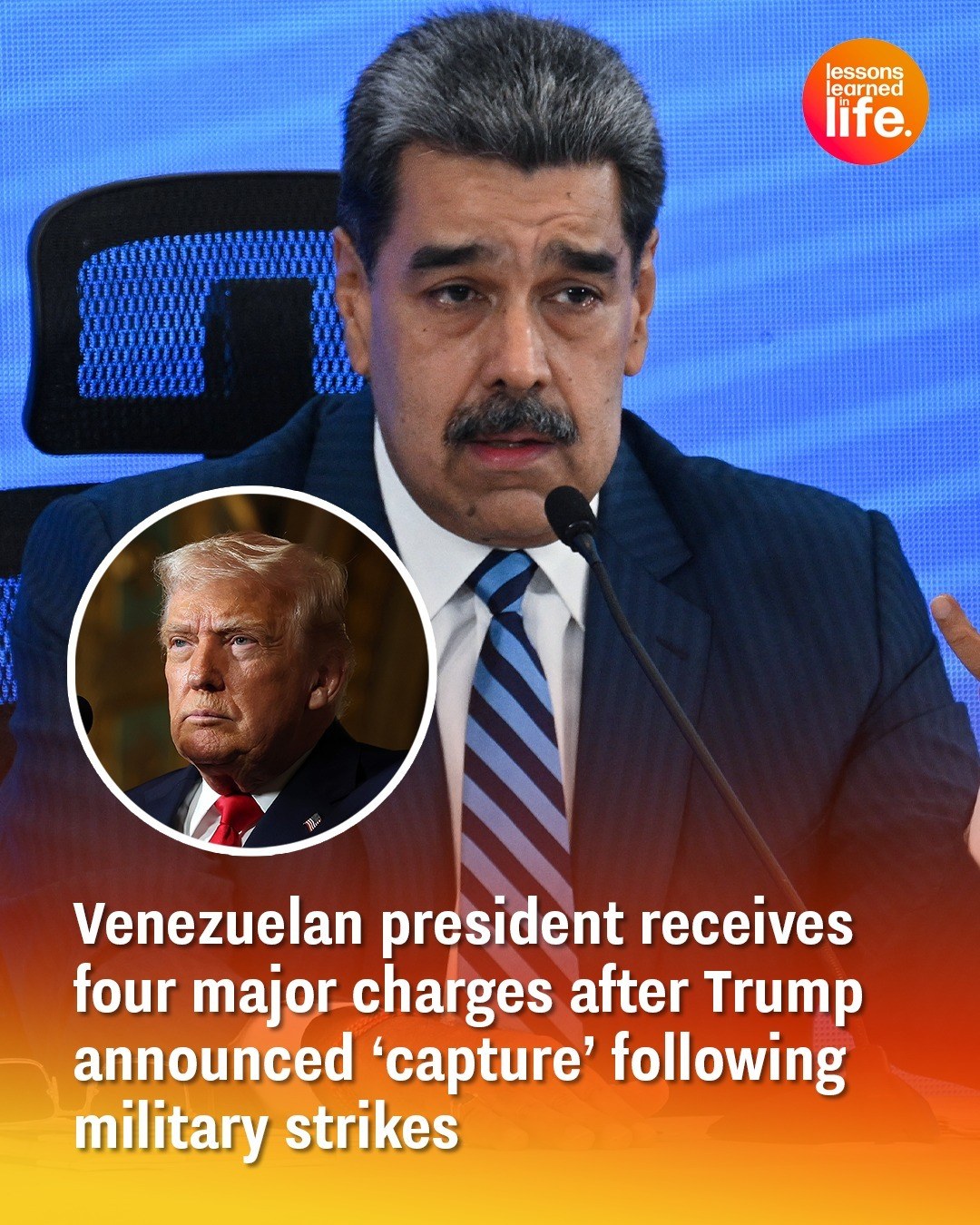
The United States’ unprecedented military operation that resulted in the capture of Venezuelan President Nicolás Maduro stunned governments and citizens around the world.
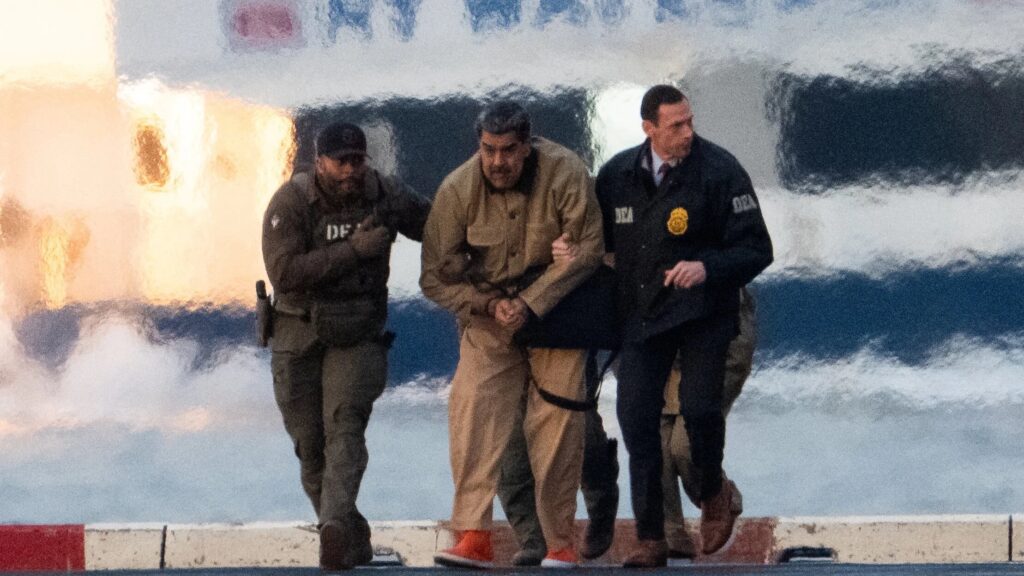
Early on January 3, 2026, U.S. forces conducted a coordinated strike on Caracas, Venezuela’s capital, with aerial and ground elements that culminated in Maduro and his wife.
Cilia Flores, being taken into custody and transported to the United States. The rapid sequence of events set off waves of shock, speculation, and international debate over legality, sovereignty, and geopolitical stability.
Initial chaos and confusion were compounded by fast‑spreading videos on social media showing explosions, troop movements, and helicopters over Caracas — images that fueled conflicting interpretations as events unfolded.
Within hours, former President Donald Trump confirmed U.S. involvement in a post on Truth Social, announcing that Venezuelan leaders had been captured and flown out of the country in a joint operation conducted “in conjunction with U.S. law enforcement.”
Trump also announced a press conference to elaborate on the circumstances and consequences of the raid.
Later that day, U.S. Attorney General Pam Bondi provided the first official details about the criminal charges now facing Maduro and his wife. In a statement issued through the U.S. Department of Justice and shared publicly, Bondi said that both Maduro and Flores had been indicted in the Southern District of New York.
According to the unsealed indictment, the charges against Maduro encompass several serious federal offenses, including:
- Narco‑terrorism conspiracy,
- Cocaine importation conspiracy,
- Possession of machineguns and destructive devices, and
- Conspiracy to possess machineguns and destructive devices against the United States.
Bondi framed the operation and the subsequent legal process as a law enforcement and national security action. She described the mission — known internally as Operation Absolute Resolve — as “incredible and highly successful,” and praised the U.S. military for executing the capture with precision.
She said that Maduro and his wife will now face “the full wrath of American justice on American soil” and underscored the severity of the charges against them.
The statement emphasized national security concerns, portraying Maduro as an alleged narco‑trafficker whose operations posed a threat to the United States.
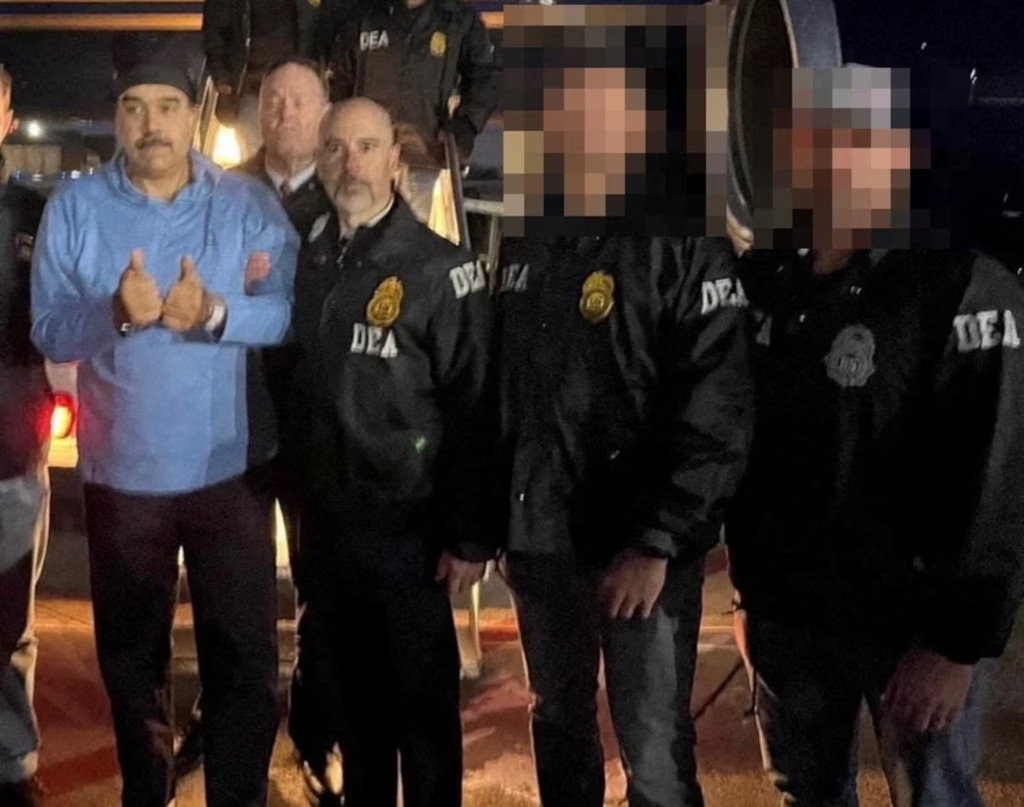
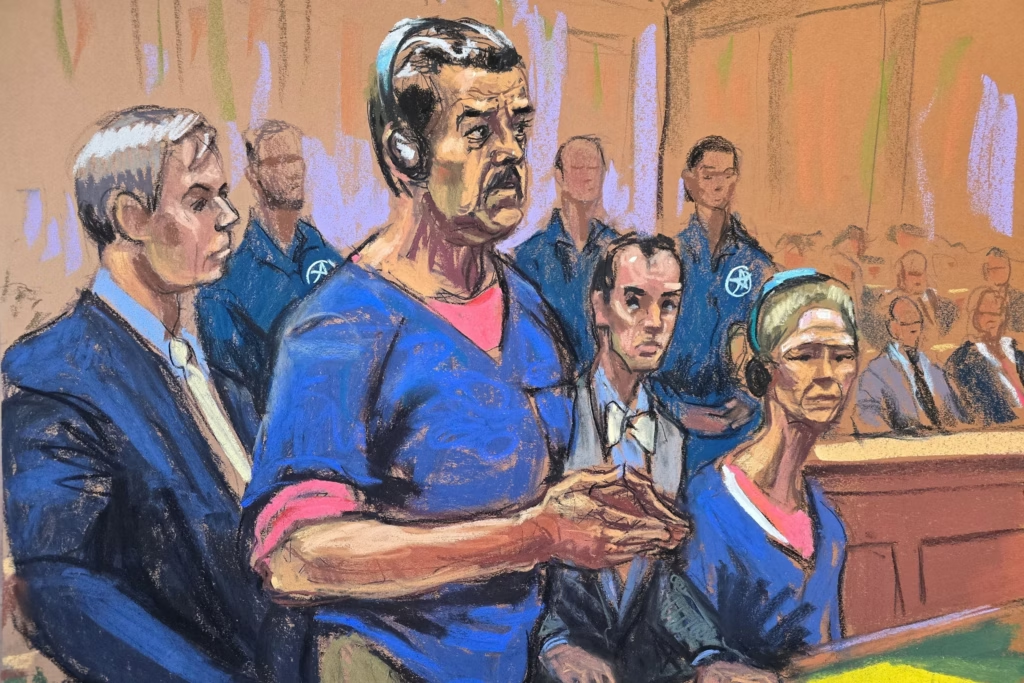
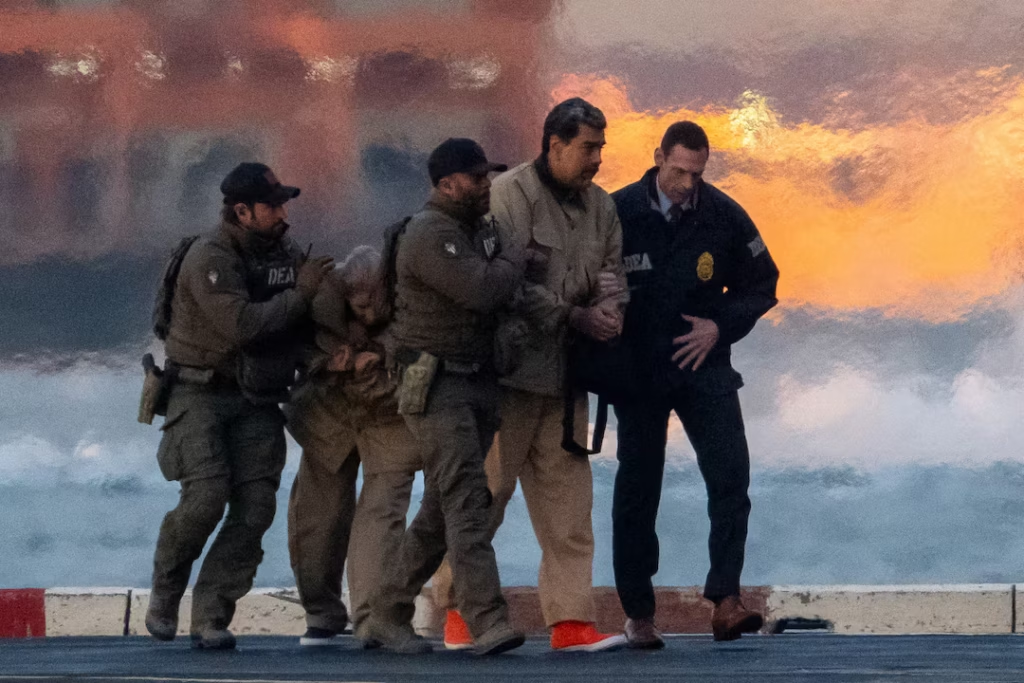
Shortly after the indictment was released, video and photographic footage showed Maduro and Flores in U.S. custody aboard a military transport as they were flown to New York. In a federal court appearance on January 5, both appeared before a judge in the Southern District of New York.
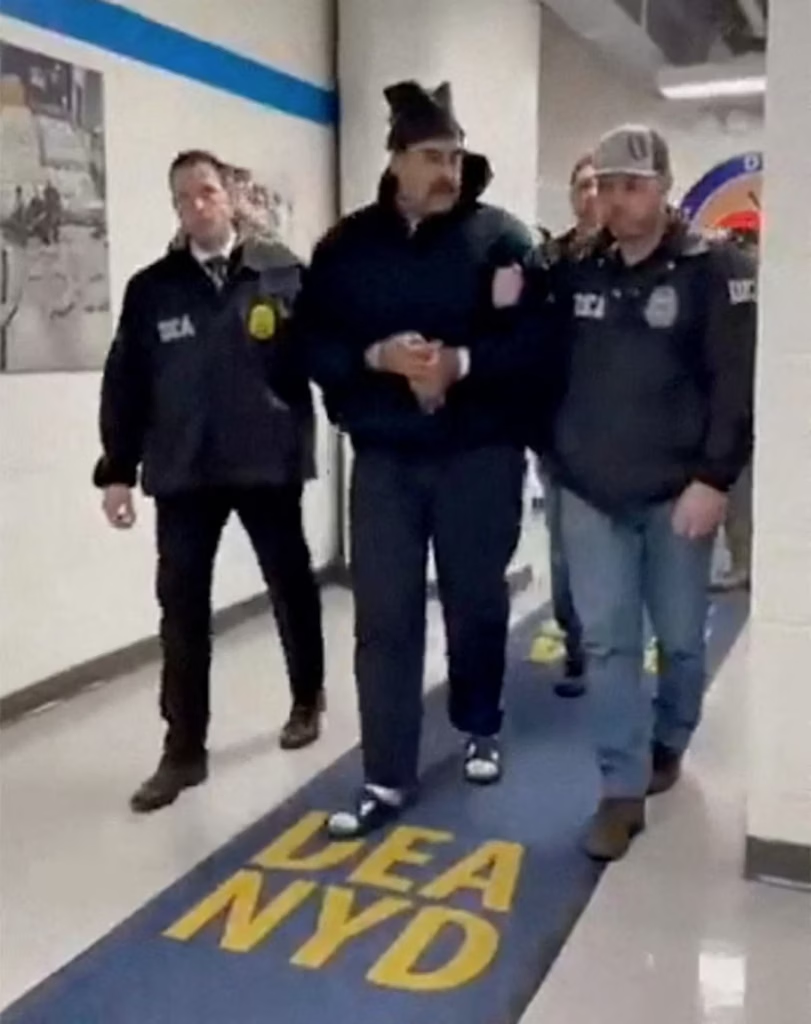
Maduro pleaded not guilty to all charges and declared himself a “prisoner of war,” asserting that the U.S. action was improper and that he remained the legitimate leader of Venezuela. Flores, similarly, pleaded not guilty.
The courtroom proceedings were brief, procedural, and tightly controlled under high security due to the extraordinary nature of the case.
The indictment alleges that Maduro and his co‑defendants orchestrated decades of criminal activity involving cocaine trafficking and the possession of illegal weapons — accusations rooted in longstanding U.S. indictments that had been unsealed after his arrest.
Prosecutors have said that Maduro used his official authority to protect and promote illegal drug distribution networks that moved tons of cocaine toward the United States, allegedly partnering with violent drug cartels and criminal organizations.
Despite the charges and pleas, Maduro and Flores remain presumed innocent until proven guilty in a U.S. court of law. Members of their legal defense team have signaled intentions to contest both the validity of the capture and the characterizations in the indictment, raising questions about legal jurisdiction, diplomatic immunity, and international norms.
Maduro’s defense attorneys have stated that the seizure was not a lawful arrest under international law — citing his status as a head of state — and have indicated plans for robust legal challenges ahead.
Back in Venezuela, the announcement of Maduro’s capture and indictment precipitated political turmoil. Vice President Delcy Rodríguez assumed the nation’s leadership in his absence, condemning the operation as a “kidnapping” and demanding immediate proof that Maduro and Flores were alive and unharmed.
Rodríguez and other Venezuelan officials have rejected the U.S. characterization of the events, framing them as an act of aggression and a violation of their country’s sovereignty.
Defense Minister Vladimir Padrino López called the U.S. action the “worst aggression Venezuela had ever faced” and urged unity among Venezuelans in defense of national dignity.
International responses to the events have been swift and divisive. Some U.S. allies expressed cautious support for holding leaders accountable for alleged criminal conduct, while others — including China and the United Nations Human Rights Office — condemned the military action as a breach of international law and a dangerous precedent for unilateral intervention.
The UN Human Rights Office said the operation undermines principles fundamental to the United Nations Charter, emphasizing that sovereignty and peaceful resolution of disputes are core pillars of international stability.
While the American government has framed the operation as a necessary step in combating international crime and drug trafficking, legal and diplomatic experts note that it raises profound questions about how criminal justice objectives intersect with international law and state sovereignty.
Critics argue that bringing a sitting president into a foreign courtroom via military means could set a precedent with far‑reaching implications for global diplomacy and the enforcement of transnational criminal charges.
Supporters counter that longstanding indictments and the alleged impact of narcotrafficking justify the action and its legal framing as law enforcement, not war.
In the United States, lawmakers and legal scholars are mulling the ramifications of the episode for constitutional powers, war powers oversight, and the scope of executive authority in foreign interventions, especially when military force is directly used to apprehend individuals accused of federal crimes.
These discussions are likely to unfold in Congress, courts, and international forums in the weeks and months ahead.
Following the overnight capture and indictment of Nicolás Maduro and Cilia Flores, attention shifted to the complex legal, diplomatic, and political implications of this unprecedented operation.
While the Southern District of New York now holds jurisdiction over Maduro’s criminal case, questions about international law, state sovereignty, and executive authority dominate discussions in Washington, Caracas, and capitals around the world.
Legal Proceedings in the U.S.
Maduro’s federal indictment establishes a formal process for adjudicating serious allegations, including narco-terrorism, cocaine importation conspiracy, and possession of destructive weapons against the United States.
Prosecutors are expected to call multiple witnesses and present substantial documentary evidence linking Maduro to decades-long trafficking operations, including communications with international cartels, financial transfers, and authorization of violent enforcement mechanisms.
Legal scholars have noted that this case is likely to be the most complex prosecution of a sitting head of state in U.S. history, raising unprecedented questions about jurisdiction and immunity.
While Maduro’s defense team has asserted claims of diplomatic immunity under international law, U.S. authorities maintain that the crimes alleged—particularly narcotics trafficking and conspiracy to commit violence on American soil—fall outside the protections traditionally granted to heads of state.
This tension sets the stage for an extended legal battle that could test the limits of international criminal law and executive power.
Additionally, any trial in New York will be conducted under high-security protocols, given the political and operational sensitivities, including the potential for international retaliation or domestic unrest in Venezuela.
Venezuelan Reaction and Internal Instability
In Caracas, Maduro’s absence triggered a wave of uncertainty and heightened security measures. Vice President Delcy Rodríguez demanded immediate proof that both Maduro and Flores were alive, emphasizing that the Venezuelan government had not consented to or sanctioned the operation.
Meanwhile, Defense Minister Vladimir Padrino López warned of a nationwide state of alert and indicated that the armed forces were ready to respond to further escalation.
These statements reflected the administration’s intent to project strength internally while seeking to rally public support amid a sudden leadership vacuum.
Observers noted that public opinion in Venezuela is likely to polarize further, with opposition groups cautiously optimistic about Maduro’s removal and supporters rallying in defiance of what they perceive as foreign interference.
Protests, both spontaneous and organized, erupted in Caracas and other major cities, reflecting widespread uncertainty and the high stakes for political stability.
International Responses
The Maduro operation sparked immediate global debate. Some U.S. allies, including select European and Latin American nations, expressed cautious support for removing a leader allegedly involved in large-scale narcotrafficking and violence.
However, many international bodies, including the United Nations and China, condemned the unilateral military action as a breach of international norms and a dangerous precedent for extraterritorial enforcement.
Analysts warned that the operation could encourage other nations to act outside multilateral frameworks, undermining decades of diplomatic protocols designed to prevent conflict escalation.
The United Nations Human Rights Office issued a statement emphasizing that state sovereignty and peaceful dispute resolution are fundamental principles under the UN Charter.
The office called on all parties to ensure Maduro and Flores’ rights were fully respected, underscoring the need for transparency and adherence to legal standards in the administration of justice.
Simultaneously, several regional organizations, including UNASUR and the Organization of American States (OAS), convened emergency sessions to discuss potential political and humanitarian implications, signaling that the operation could trigger wider regional instability.
Geopolitical Implications
The seizure of a sitting president through military means has immediate and long-term ramifications for U.S. foreign policy. Domestically, Congress faces renewed debates over the scope of executive authority in authorizing cross-border military operations without prior legislative approval.
Internationally, critics warn that such actions may erode trust in the United States as a partner and provoke retaliatory measures from adversarial states.
Analysts highlight that Latin American countries may recalibrate alliances and security strategies, wary of U.S. unilateral interventions in the hemisphere.
Economic ramifications are also notable. Venezuela, heavily dependent on oil exports, faces immediate disruption of its production and shipping capabilities.
Reports indicate that U.S. forces temporarily secured key oil facilities during the operation, raising concerns among global markets about energy supply and pricing.
While the U.S. government has emphasized that strategic reserves will remain stable, the long-term economic consequences for Venezuela and regional trade networks remain uncertain.
Future Prospects
As Maduro and Flores prepare to face U.S. courts, the political and diplomatic fallout continues to unfold. The administration has indicated that the operation is a law enforcement measure, but the extraordinary nature of the mission ensures it will be discussed as a defining event in international relations and criminal justice history.
Questions remain: How will Venezuela respond internally? Will the operation set a precedent for capturing leaders accused of international crimes? How will U.S. courts navigate issues of immunity, jurisdiction, and evidence?
Meanwhile, analysts stress the importance of distinguishing between criminal prosecution and political narratives. Maduro’s defense team will undoubtedly argue that the operation was unlawful, while the U.S. administration frames it as a necessary intervention against organized crime with global reach.
Public perception, both within Venezuela and internationally, will shape the broader geopolitical and humanitarian discourse for months and years to come.
In conclusion, the capture and indictment of Nicolás Maduro represents a watershed moment in modern geopolitics. It challenges traditional understandings of state sovereignty, tests the limits of U.S. executive power, and signals a new era in international law enforcement.
With ongoing court proceedings, regional tensions, and global scrutiny, the operation will continue to shape debates on justice, diplomacy, and security long after the immediate events have passed.
The world now watches closely, aware that the legal and political consequences of this unprecedented action are just beginning to unfold.